



The Foreign Exchange Management Act (FEMA) 1999 represents one of India’s most transformative economic legislations. Enacted on December 29, 1999, and implemented on June 1, 2000, FEMA fundamentally revolutionized how India manages foreign exchange transactions, foreign investment, and cross-border commerce. This shift from the restrictive Foreign Exchange Regulation Act (FERA) 1973 marked India’s commitment to economic liberalization and positioned the nation for greater global financial integration.
The contrast between FEMA and FERA couldn’t be starker. Under FERA’s nearly 27-year reign, foreign exchange was treated as a scarce resource requiring severe restrictions. The phrase “everything was prohibited unless specifically permitted” defined the FERA era. Citizens faced imprisonment for minor foreign exchange violations, and the law operated on the principle of “guilty until proven innocent.”
FEMA flipped this philosophy entirely. It adopted a management-based approach rather than a prohibition-based one, embodying the principle: “everything is permitted unless specifically prohibited.” This fundamental mindset change transformed India from a fortress economy into an open market. The most revolutionary aspect? FEMA converted all foreign exchange violations from criminal offenses to civil offenses, meaning penalties replaced imprisonment as the primary consequence.
FEMA introduced a 180-degree shift in regulatory philosophy. Where FERA required RBI approval for virtually every foreign transaction, FEMA introduced the “automatic route” for foreign direct investment in most sectors. This simplified framework enabled companies to receive FDI without government pre-approval, accelerating investment timelines from months to weeks.
The definition of “Authorized Person” also expanded dramatically. Under FEMA, banking units, authorized dealers, and a broader range of financial institutions could handle foreign exchange transactions, democratizing access to foreign exchange services previously controlled by selective entities.
1. Liberalization of Capital Flows: FEMA made it legally permissible for resident Indians to hold foreign assets, overseas investments, and foreign currency accounts previously unthinkable under FERA.
2. Introduction of the Liberalised Remittance Scheme (LRS): Starting 2004, FEMA enabled resident individuals to remit up to USD 250,000 annually abroad for permitted current or capital account transactions without RBI approval. This single provision opened doors for education, business expansion, and personal investments globally.
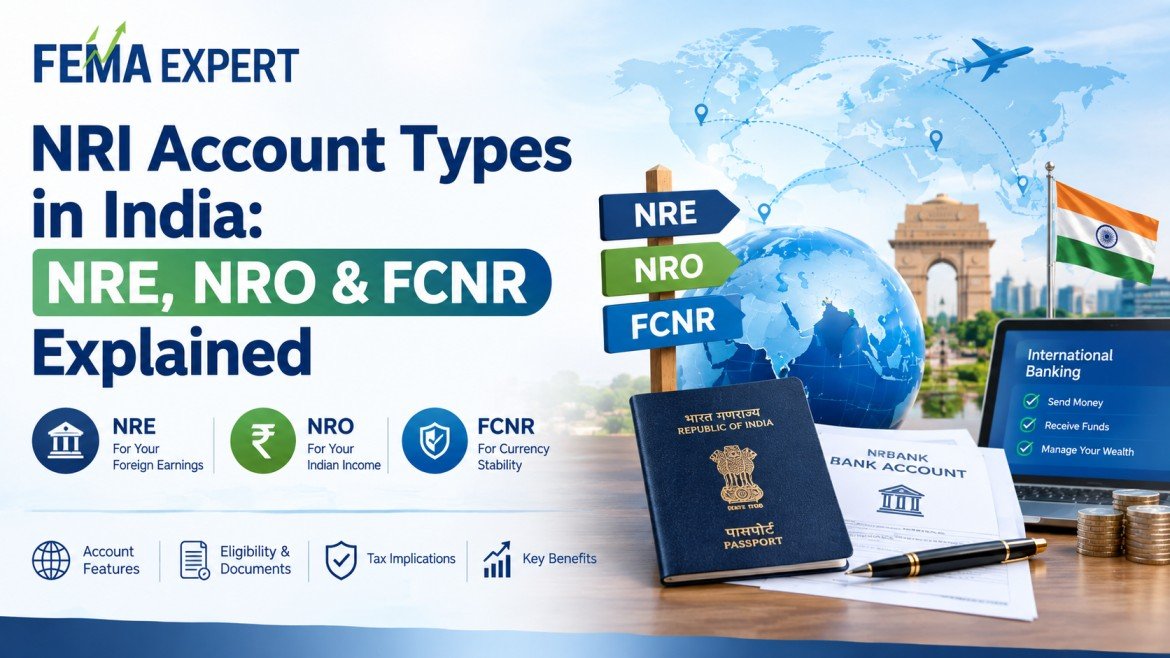
3. Facilitation of NRI Investments: FEMA created structured frameworks (NRE, NRO, FCNR accounts) enabling Non-Resident Indians to invest in India while maintaining repatriation rights, turning the diaspora into a powerful economic force.
4. FDI-Led Startup Ecosystem: FEMA’s simplified procedures for foreign investment became the backbone of India’s startup revolution, with foreign investors now able to participate without bureaucratic delays.
FEMA arrived at the perfect moment when India’s foreign exchange reserves had stabilized, liberalization reforms (1991) had taken root, and the economy was ready for global participation. It aligned India with World Trade Organization (WTO) frameworks and positioned the nation as an attractive investment destination.
The act enabled India to attract $44.42 billion in FDI equity inflows in FY 2023-24, a trajectory that would have been impossible under FERA’s restrictions. More importantly, it signaled to global investors that India was serious about economic modernization.
Automatic Route vs Government Route: For most sectors (software, manufacturing, consulting), foreign investors can now invest up to 100% equity without seeking government permission. This “automatic route” is what fueled India’s IT boom and tech startup explosion.
Pricing Flexibility: FEMA eliminated arbitrary pricing controls. Valuations now follow market-driven norms, making equity funding more attractive and aligned with global standards.
60-Day Share Allotment: Funds received must be converted to shares within 60 days a clear timeline replacing the ambiguity of FERA era.
For startups, FEMA changed everything:
Before FEMA, a startup founder sending funds abroad for business purposes faced weeks of paperwork and RBI scrutiny. FEMA’s Liberalised Remittance Scheme now allows individuals to send up to USD 250,000 annually for education, travel, family maintenance, and business purposes no questions asked.
For Indian companies, FEMA enabled Overseas Direct Investment (ODI), allowing them to acquire assets, invest in subsidiaries, and participate in global M&A activities.
FEMA removed the shackles on cross-border payments. Indian exporters can now retain a portion of foreign exchange earnings without RBI approval, import raw materials more flexibly, and engage in legitimate international commerce without fear of criminal prosecution.
The External Commercial Borrowing (ECB) framework under FEMA enables Indian companies to raise loans from foreign banks and development institutions. This has financed everything from infrastructure projects to corporate expansions, making “Made in India” a global brand.
NRE Accounts: Non-Resident External accounts allow NRIs to earn interest on foreign currency deposits without taxation worries and repatriate funds freely. This was revolutionary under FERA, NRI savings faced restrictions.
NRO Accounts: Non-Resident Ordinary accounts enable NRIs to manage Indian-sourced income (rental, salary, business) with the flexibility to repatriate up to USD 1 million annually.
FCNR Accounts: Foreign Currency Non-Resident accounts let NRIs earn competitive interest rates while maintaining foreign exchange risk protection.
The structured treatment of NRE, NRO, and FDI under FEMA created parallel pathways for different needs. Investors can choose repatriable (NRE) or non-repatriable (NRO) modes based on tax planning needs. This segmentation made NRI investments truly flexible.
Post-1999, compliance became transparent and predictable:
From Criminal to Civil: The most transformative legal shift was reclassifying violations from criminal to civil offences. Under FERA, violators faced imprisonment. Under FEMA, they pay fines.
Expanded RBI Powers: FEMA gave the RBI clearer authority to issue notifications and adapt regulations without legislative changes, enabling faster policy responsiveness.
Special Tribunal System: FEMA introduced Special Appellate Tribunals for disputes, replacing the lengthy High Court appeals process of FERA era.
This distinction cannot be overstated. Under FERA, an NRI forgetting to file a repatriation form faced potential prosecution. Under FEMA, the same violation attracts a civil penalty compounded over 90 days harsh but not criminal. This shift transformed India’s image from a risky, legally uncertain destination to a stable, regulated market.
FEMA empowered the RBI to regulate foreign exchange markets pro-actively. The central bank now issues Master Directions, clarifying guidance on FDI, ECB, and downstream investments. This regulatory clarity replaced FERA’s bureaucratic ambiguity.
Example 1 – Startup Funding: A Bangalore startup receives a USD 1 million investment from a Silicon Valley VC. Under FERA, this required 3-4 months of RBI scrutiny, valuations approved by bureaucrats, and criminal liability for any documentation error. Under FEMA, with proper FC-GPR filing and valuation certification, funds can be credited to the company bank account within weeks.
Example 2 – NRI Property Investment: An NRI in the UK wants to buy a ₹1 crore apartment in Mumbai. Under FERA, this was nearly impossible due to tight capital controls. Under FEMA, they can simply open an NRE account, remit funds, and purchase property. Repatriation of sales proceeds (up to USD 1M/year) is legally permissible.
Example 3 – ESOP Grant to Foreign Employee: A Bangalore tech company wants to grant ESOPs to its US-based VP Engineering. Under FERA, this would trigger complex foreign exchange violations. Under FEMA, ESOP grants to foreign employees follow clear regulatory guidelines with transparent filing requirements.
Navigating FEMA compliance requires expert guidance. A FEMA Consultant in India specializes in:
For startups and Indian companies with foreign investors, engaging a FEMA consultant early prevents costly compliance failures and enables faster fund deployment.
A: FEMA (Foreign Exchange Management Act), 1999 is the primary Indian legislation governing all foreign exchange transactions, foreign investments, and cross-border payments. It replaced FERA in 2000 and enables facilitated management of foreign exchange rather than strict regulation.
A: FEMA 1999 refers to the act passed by Parliament on December 29, 1999. It became effective on June 1, 2000, replacing 27 years of FERA restrictions with a liberalized framework aligned with India’s economic liberalization policies.
A: FEMA became applicable from June 1, 2000. However, FERA continued for a 2-year sunset period (until May 31, 2002) to allow investigations into pending FERA violations to complete.
A: Yes, with restrictions. Under FEMA Rules 1999, a director’s spouse can do business independently or as a partner/shareholder in firms. However, if the spouse is a foreign national or NRI, specific conditions apply regarding investment channels, repatriation limits, and sector restrictions. A foreign national spouse cannot own agricultural property under FEMA.
A: FEMA stands for Foreign Exchange Management Act. The full formal name is “The Foreign Exchange Management Act, 1999.”
A: Key differences include:
A: Yes. NRIs can invest in Indian startups through:
A: Penalties range from ₹2 lakhs to 3 times the transaction amount, with additional ₹5,000 per day for continuing violations. Violations can be compounded if paid within 90 days, avoiding criminal proceedings.
A: NRIs can invest in most Indian mutual funds through NRE or NRO accounts. However, repatriation from NRO accounts is capped at USD 1 million annually. PPF, NSC, and other small savings schemes are prohibited.
A: LRS, introduced in 2004, permits resident Indians to remit up to USD 250,000 annually for permitted current or capital account transactions (education, travel, business, family support) without RBI approval.
Conclusion
The FEMA Act 1999 revolutionized India’s foreign exchange landscape by replacing prohibition with facilitation, criminality with civil compliance, and bureaucratic approval with transparent rules. Twenty-five years after its implementation, FEMA remains the backbone of India’s $1+ trillion digital and startup economy. For businesses, investors, and individuals, understanding FEMA is no longer optional it’s the foundation of legitimate international participation in the Indian economy.