

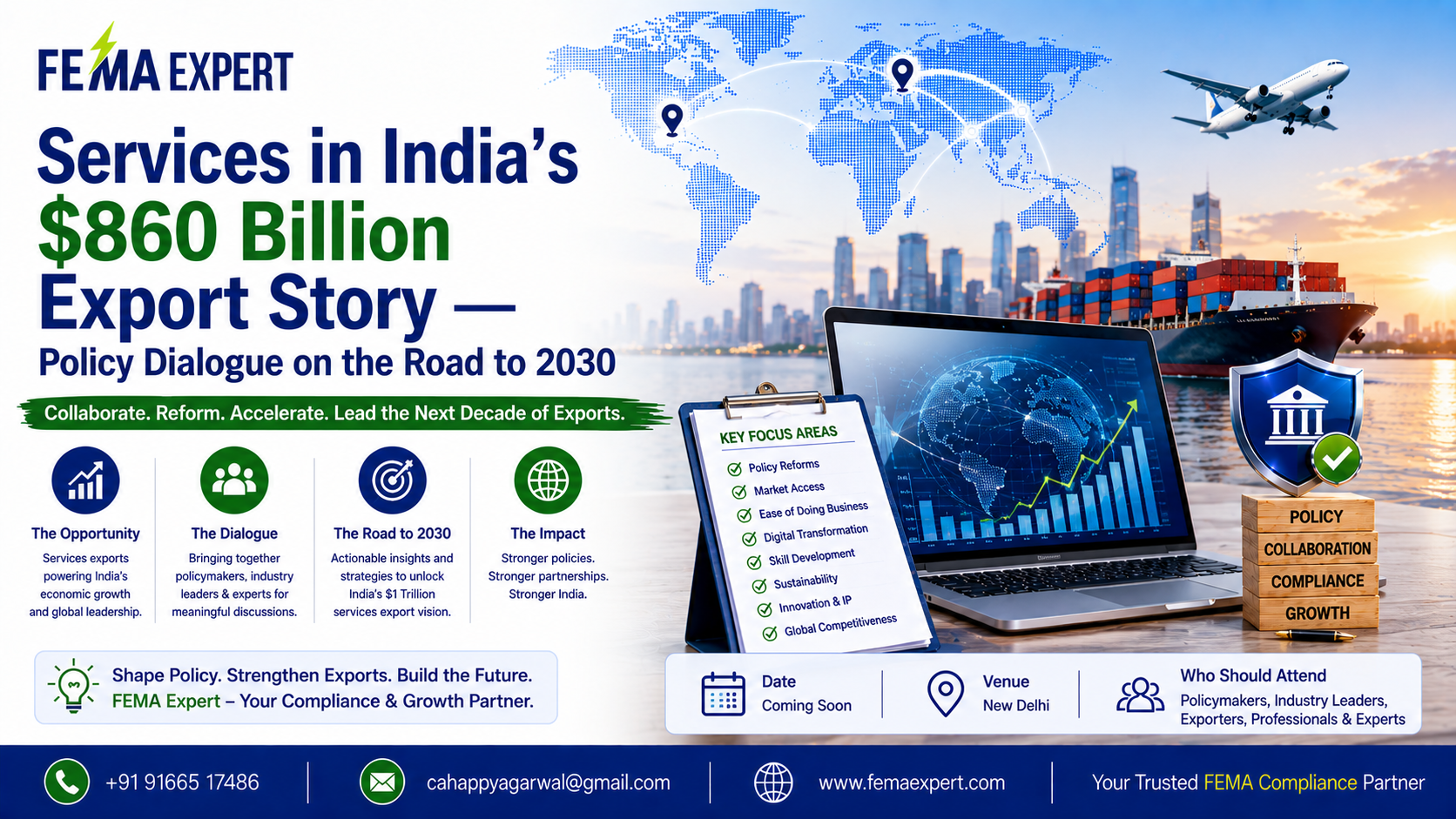
India has achieved a remarkable milestone by crossing $860 billion in total exports, highlighting the country’s growing role in global trade. While merchandise exports continue to contribute significantly, the real growth story is increasingly being driven by India’s services exports.
From IT services and software development to consulting, engineering, fintech, healthcare, and business process management, Indian companies are serving clients across the world. As India moves toward its vision for 2030, services exports are expected to become one of the biggest pillars of economic growth.
Over the last decade, India’s services sector has evolved beyond traditional outsourcing. Today, Indian businesses provide high-value services in technology, finance, research, design, analytics, legal support, and digital transformation.
This shift has made services exports India more resilient and globally competitive. Unlike physical goods, services can be delivered digitally, allowing businesses to reach international customers faster and more efficiently.
As global demand for digital solutions continues to grow, India is well-positioned to strengthen its status as a leading global services hub.
The contribution of services to export growth India cannot be ignored. Services exports generate foreign exchange earnings, create high-skilled employment opportunities, and support the country’s economic development.
Several factors are driving this growth:
These strengths provide India with a significant competitive advantage in the global marketplace.
Experts believe that India’s services exports could reach unprecedented levels by 2030. This growth will be supported by increasing digital adoption worldwide, expansion of remote service delivery models, and new international trade opportunities.
Key sectors expected to lead growth include:
India remains a preferred destination for software development, cloud solutions, artificial intelligence, and digital transformation projects.
Indian fintech companies are expanding globally, offering innovative payment solutions, digital banking support, and financial technology services.
Global companies increasingly rely on India for engineering design, research, product development, and innovation support.
Telemedicine, online learning, and professional training services are creating new export opportunities.
To achieve long-term growth, India needs supportive policies that encourage innovation while simplifying compliance requirements.
Key policy priorities include:
A balanced policy environment can help businesses scale globally while maintaining regulatory compliance.
As services exports continue to expand, understanding FEMA Regulations becomes increasingly important.
Exporters must comply with various foreign exchange requirements related to invoicing, realization of export proceeds, documentation, and reporting obligations.
Changes in export reporting frameworks and digital compliance systems are aimed at improving transparency and reducing administrative burdens. However, businesses must still ensure that their processes remain aligned with regulatory requirements.
This is where guidance from a FEMA Expert can be valuable. A FEMA Expert helps businesses understand regulatory changes, maintain compliance, manage reporting obligations, and avoid potential penalties.
The future of India’s services exports is closely linked to digital trade.
Artificial Intelligence, cloud computing, automation, cybersecurity, and data analytics are creating new opportunities for Indian service providers. Companies that invest in technology, innovation, and compliance will be better positioned to compete globally.
As international business models continue to evolve, India’s services sector has the potential to become one of the strongest contributors to the country’s export success story.
While the outlook remains positive, certain challenges must be addressed:
Addressing these challenges will require collaboration between government agencies, regulators, industry bodies, and businesses.
India’s $860 billion export milestone reflects the growing strength of the country’s economy and its increasing integration with global markets. Services exports have become a major driver of this success and are expected to play an even larger role in the years ahead.
As India advances toward 2030, a combination of innovation, digital transformation, supportive policy reforms, and effective compliance with FEMA Regulations will be critical.
Businesses that embrace these opportunities and seek guidance from experienced FEMA Experts will be better equipped to participate in India’s next phase of export growth and global leadership.