



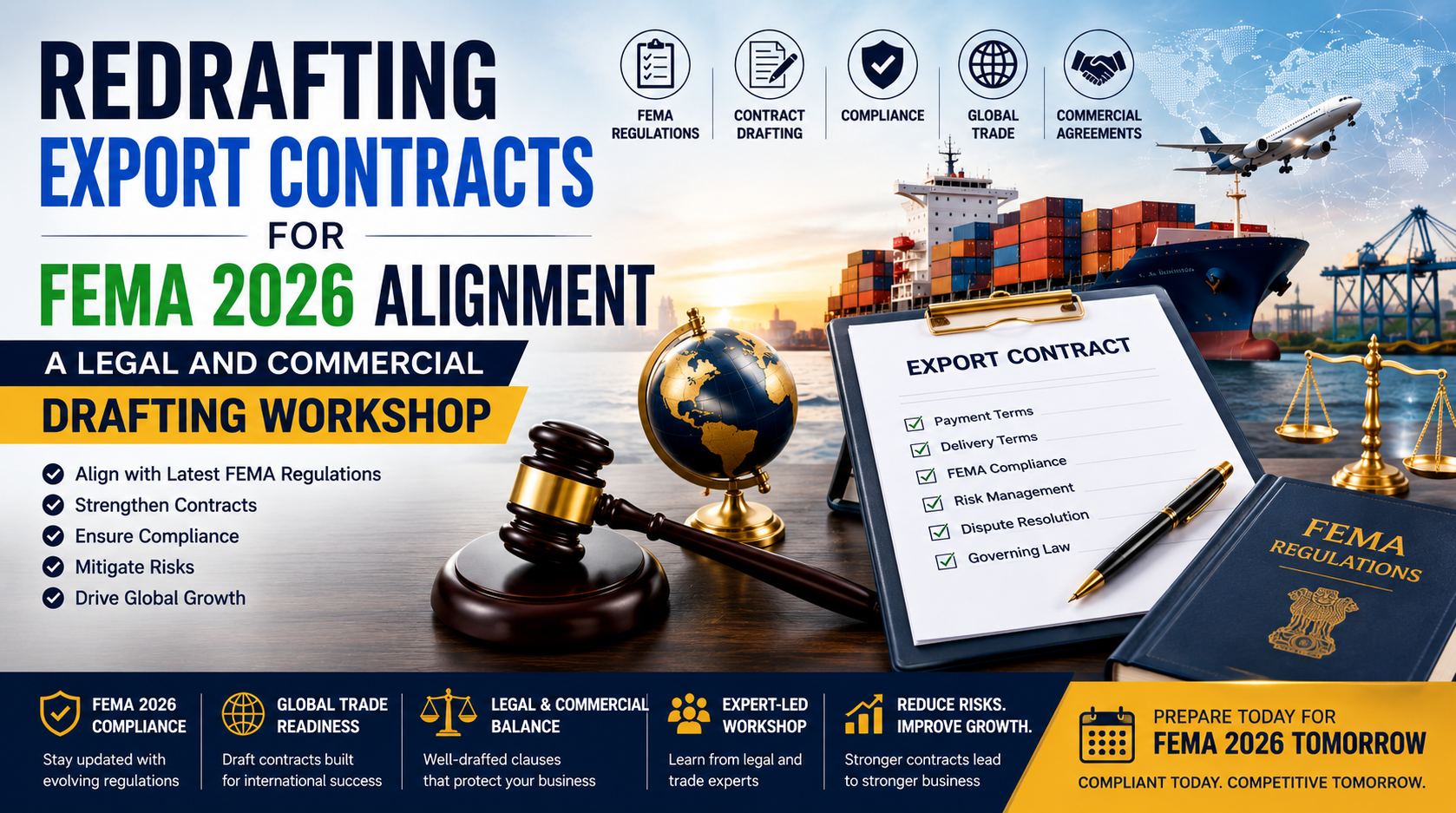
Export contracts are the foundation of international trade. They define the rights, responsibilities, payment terms, and delivery conditions between exporters and overseas buyers. With evolving FEMA regulations, businesses involved in exports must regularly review and update their contracts to remain compliant.
As regulatory requirements continue to change, companies should ensure that their export agreements align with the latest Foreign Exchange Management Act (FEMA) guidelines. Properly drafted contracts help businesses avoid legal disputes, payment delays, and compliance issues.
The global trade environment is constantly changing. New compliance requirements, digital transactions, and cross-border payment systems have made it necessary for exporters to review their agreements regularly.
Export contracts drafted several years ago may not address current regulatory expectations. Updating these agreements ensures that businesses meet the latest FEMA regulations, reduce operational risks, and maintain smooth international business relationships.
FEMA compliance plays a crucial role in export transactions. Businesses must ensure that contract terms support timely realization of export proceeds, proper documentation, and regulatory reporting requirements.
Some key areas that require attention include:
Understanding these requirements can help exporters avoid penalties and improve transaction efficiency.
Many export agreements contain outdated clauses that may create compliance risks. Common issues include:
Identifying these gaps is the first step toward creating a FEMA-compliant export contract.
When reviewing export contracts, businesses should pay special attention to critical clauses such as:
Payment Terms
Clearly define payment methods, currency, and timelines.
Delivery Terms
Specify shipment responsibilities and delivery obligations.
Compliance Clauses
Include provisions addressing applicable FEMA regulations and RBI requirements.
Force Majeure
Protect parties against unforeseen events affecting contract performance.
Dispute Resolution
Define governing law, jurisdiction, and arbitration procedures.
Payment clauses are among the most important sections of an export contract. Exporters should clearly mention:
Properly drafted payment terms help businesses comply with FEMA requirements related to export proceeds and foreign exchange transactions.
Accurate documentation is essential for international trade compliance. Exporters should maintain:
Proper documentation supports compliance and helps businesses demonstrate adherence to applicable regulations.
Foreign exchange fluctuations can significantly impact export profitability. Contracts should include provisions that address:
Managing these risks helps exporters protect their financial interests and maintain predictable revenue streams.
Export contracts should comply with both domestic and international legal requirements. Businesses must consider:
A legally sound contract reduces disputes and strengthens business relationships.
Commercial clauses are just as important as legal provisions. Businesses should carefully review:
Well-defined commercial terms improve transparency and reduce misunderstandings between parties.
To ensure compliance and efficiency, exporters should:
These practices help businesses operate smoothly in global markets.
Legal and compliance professionals play a vital role in export contract management. They help businesses:
Professional review helps organizations stay prepared for changing regulatory requirements.
Several exporters face challenges because of:
Learning from these common mistakes can help businesses create stronger and more compliant contracts.
Updating export contracts offers several advantages:
Compliance-focused contracts support long-term business growth.
Before finalizing any export agreement, ensure that:
As international trade continues to evolve, businesses must ensure that their export contracts remain compliant and commercially effective. Redrafting agreements in line with current FEMA regulations helps exporters reduce risks, improve compliance, and strengthen cross-border business operations.
For businesses seeking guidance on export compliance, contract review, and FEMA-related matters, FEMA Expert provides professional support to help organizations navigate complex regulatory requirements with confidence.
What is FEMA compliance in export contracts?
FEMA compliance ensures that export transactions follow the Foreign Exchange Management Act and related RBI guidelines.
Why should export contracts be updated regularly?
Regular updates help businesses stay aligned with changing regulations, commercial practices, and international trade requirements.
Which clauses are most important in export contracts?
Payment terms, delivery conditions, compliance clauses, dispute resolution provisions, and foreign exchange risk management clauses are among the most important.
How can businesses reduce FEMA compliance risks?
Businesses can reduce risks by maintaining proper documentation, monitoring export proceeds, and ensuring contracts comply with applicable FEMA requirements.
How can FEMA Expert help exporters?
FEMA Expert assists businesses with FEMA compliance, export transaction reviews, regulatory guidance, and contract-related advisory services.