
One of our clients, a battery importer, got a compliance notice out of the blue. He genuinely thought his BIS certificate had him covered.
It didn’t. BIS and EPR are two entirely different boxes to tick, and mixing them up is more common than you’d expect.
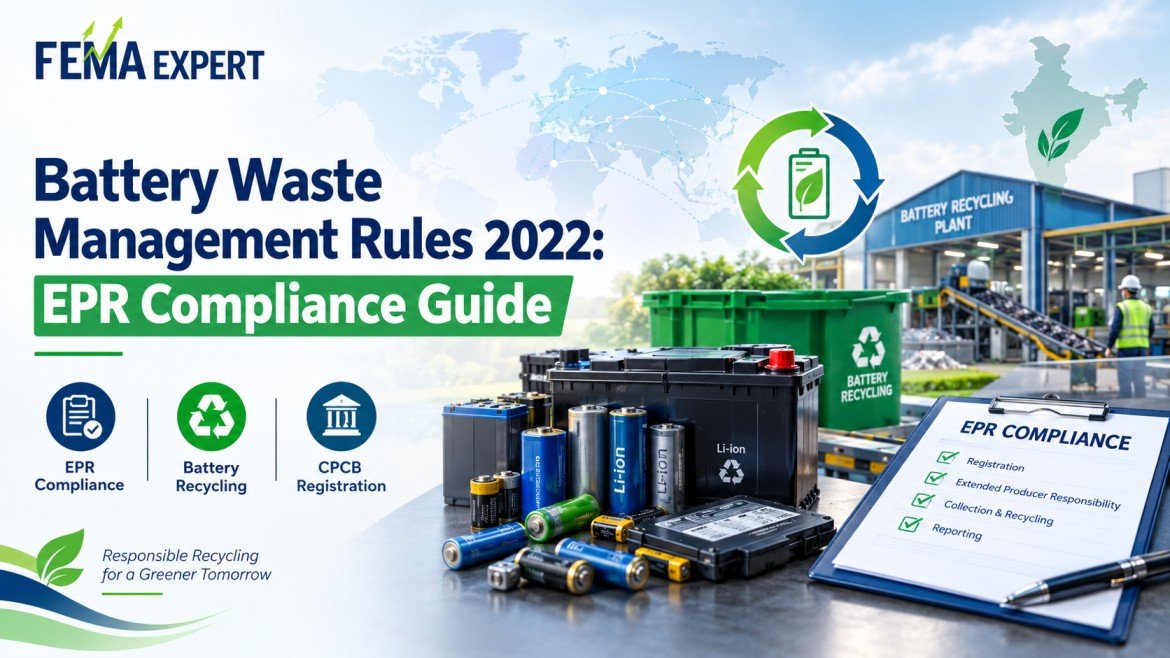
This piece covers the Battery Waste Management Rules. It explains what producers, importers, and brand owners must do.
These rules replaced India’s old battery regulations. They also made battery EPR registration a need.
The thinking behind it isn’t complicated. If you put a battery on the market, you’re also expected to bring it back once it’s dead. That obligation cuts across every battery category, there’s no carve-out for a particular type.
Basically, if a battery of yours ends up in an Indian consumer’s hands, this rule has your name on it.
Once you’re registered, you’re handed a yearly collection target, and it climbs a bit further each year.
Makes sense when you think about it. More batteries sold means more batteries eventually need collecting and recycling. Nobody gets to sell and simply forget what happens after.
The whole thing runs online through the Central Pollution Control Board’s portal. Broadly, here’s what it looks like:
Hit your collection and recycling numbers, and you earn EPR certificates. And here’s the interesting part, these certificates aren’t locked to you, they can be traded.
That flexibility matters. A company that clears more than its target can sell the surplus. One that’s fallen short can buy certificates instead of scrambling to fix things overnight. It’s what keeps the whole system functional even when different players perform differently.
Registration alone doesn’t get you off the hook. You need an actual collection setup, usually built through tie-ups with authorised recyclers and collection partners.
And it’s not a one-time declaration either. When annual returns come around, you’ll need real numbers backed by real documentation, not just an estimate.
For anyone manufacturing, importing, or branding batteries in India, EPR registration isn’t a box you can skip. Understanding your targets early, and setting up a proper collection system before you need one, is what keeps this from turning into a compliance headache later.
1. What are the Battery Waste Management Rules?
They must producers, importers, and brand owners to collect and recycle used batteries.
2. Who actually needs to register for battery EPR?
Anyone manufacturing, importing, or selling batteries under their own brand in India falls under this requirement.
3. Where does battery EPR registration happen?
It’s done online, through the Central Pollution Control Board’s dedicated EPR portal.
4. What if a company misses its EPR collection target?
Expect environmental compensation charges, and if it keeps happening, registration suspension becomes a real risk.
5. Are EPR certificates something you can trade?
Yes. Companies that beat their targets can sell their extra certificates, and companies that fall behind can buy what they need.
6. Do EV batteries fall under these rules too?
They do, EV batteries are explicitly named as a covered category.
7. Is BIS certification the same thing as EPR registration?
No, they’re separate altogether. BIS is about product standards; EPR is about what happens to the product after use.
8. What paperwork does battery EPR registration need?
Your incorporation certificate, GST registration, PAN, product specifications, and details on who’s managing your recycling.