
A device maker once had a hospital tender ready to win. Then the buyer asked for a licence number. He didn’t have one. The tender slipped away.
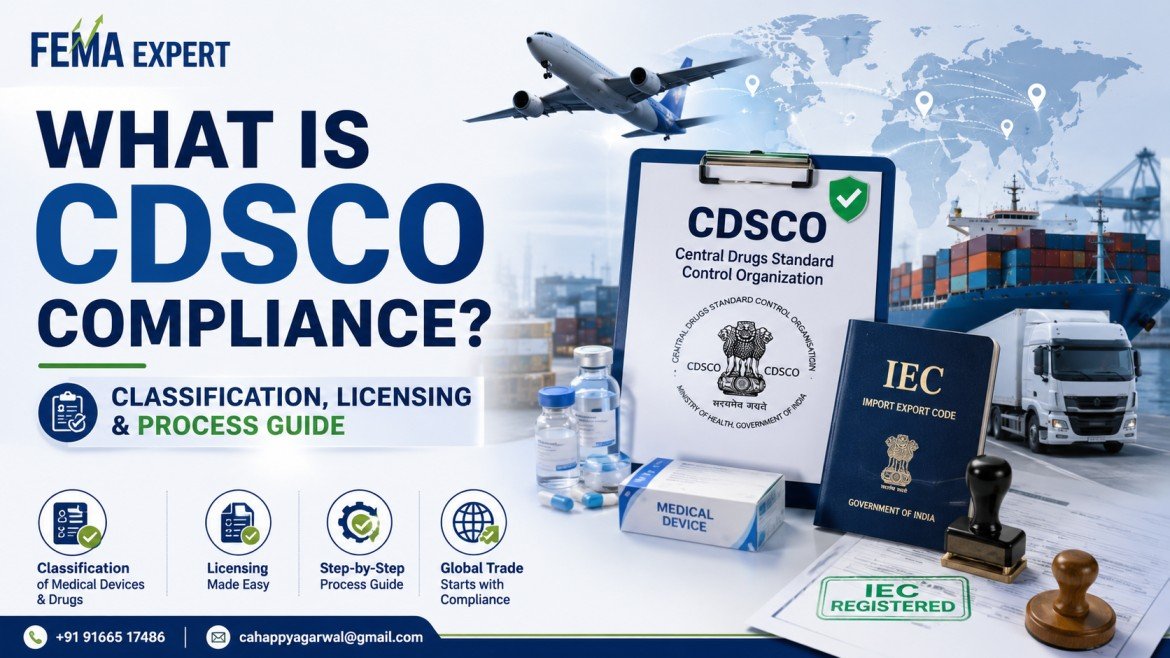
This happens often. Many businesses don’t realise medical devices and drugs need government licensing in India before they can be sold. This guide covers what is CDSCO compliance, and how the licensing process actually works.
CDSCO compliance is not a certification. It’s licensing.
Manufacturing, importing, or selling medical devices and drugs in India requires a licence. This licence comes from the government, under the Medical Devices Rules and the Drugs and Cosmetics Act.
Without this licence, you can’t legally sell your product in India. No private company can grant it either. Only the government can.
CDSCO stands for the Central Drugs Standard Control Organisation. Along with State Licensing Authorities, they issue CDSCO licence approvals.
Which authority handles your application depends on one thing: your product’s risk class.
Every device gets sorted into a risk class first. This decides everything else that follows.
Getting this classification right matters. It sets your authority, your forms, your fees, and your inspection process.
Lower risk devices go through the state authority. Notified bodies registered with CDSCO handle site audits for these classes.
Higher risk devices need central government approval. Central officers inspect these sites directly.
Import licences work differently. All classes need central approval for imports, regardless of risk level.
This document describes your manufacturing site. It covers facilities, equipment, and processes used there.
This one’s about the product itself. It covers design, materials, sterilisation methods, and shelf life.
Many applications get rejected here. Businesses write this like a marketing brochure. The Rules expect a specific structure instead.
CDSCO expects a working quality system. The requirement is called the Fifth Schedule.
Most companies meet this using ISO 13485 certification. The content maps closely between both standards. For overseas manufacturers, a current ISO 13485 certificate is practically expected for import approval.
Your application needs solid proof, not just paperwork.
Getting the licence isn’t the finish line. Ongoing duties continue after approval.
Foreign companies can’t hold an import licence directly. They need an Indian authorised agent.
This agent takes on real responsibility. They handle record keeping, labelling, and adverse event reporting on your behalf. Choosing this agent carelessly is a costly mistake. Moving the licence later isn’t quick or simple.
Step 1: Determine your risk class. Check your product against the published classification lists.
Step 2: Confirm your licensing route. Identify whether state or central authority applies to you.
Step 3: Prepare your master files. Build the Plant Master File and Device Master File to the required format.
Step 4: Complete your quality system. Get ISO 13485 certification aligned with Fifth Schedule requirements.
Step 5: Gather test reports. Collect evidence from approved or NABL-accredited labs.
Step 6: Submit your application. File through the online CDSCO portal.
Step 7: Go through inspection. Notified bodies or central officers will audit your site, depending on class.
Step 8: Receive your licence. Once approved, you get Form MD-5, MD-9, or MD-15 based on your application type.
CDSCO licences don’t expire on a fixed date. They run in perpetuity.
But there’s a catch. You must pay a retention fee before every fifth year. Miss this, and your licence status comes into question, even without any wrongdoing.
Most delays come from filing before the evidence is actually ready. A readiness check before submission saves real time later.
CDSCO compliance decides if your medical device or drug can enter the Indian market. It checks whether it meets legal requirements. Get your classification, master files, and quality system right from the start. This helps you avoid query letters and delays. These issues often trip up applicants.
If you’re preparing a CDSCO application, get your evidence ready before you file. That single step prevents most of the common holdups.
1. What is CDSCO compliance?
The licensing system decides if a medical device or drug can be made, imported, or sold in India.
2. Is CDSCO compliance a certification?
No, it’s government licensing. Only CDSCO and State Licensing Authorities can grant these licences.
3. Which authority licenses my device?
It depends on your risk class. Class A and B go through the state; Class C and D go through the central authority.
4. How long does a CDSCO licence last?
It runs in perpetuity, but you must pay a retention fee before every fifth year to keep it valid.
5. Do I need ISO 13485 for CDSCO?
The Rules have their own quality system need, called the Fifth Schedule. Most applicants meet it through ISO 13485 certification.
6. Can an overseas manufacturer hold the import licence directly?
No, an authorised Indian agent must hold the licence. This agent handles the product in India.
7. How long does the CDSCO licensing process take?
Class A and B often close within three to six months if the application is ready. Class C and D usually take longer.
8. What happens if I miss the retention fee deadline?
Your licence status comes into question, even if your compliance was otherwise fine. It’s a common, avoidable mistake.