
A supplier once delivered goods on credit. Payment terms were 90 days. But his own bills couldn’t wait. Rent was due. Salaries were due too.
This is where bill discounting helps. This guide covers what is bill discounting. It explains the process. It also helps you decide if it fits your business.
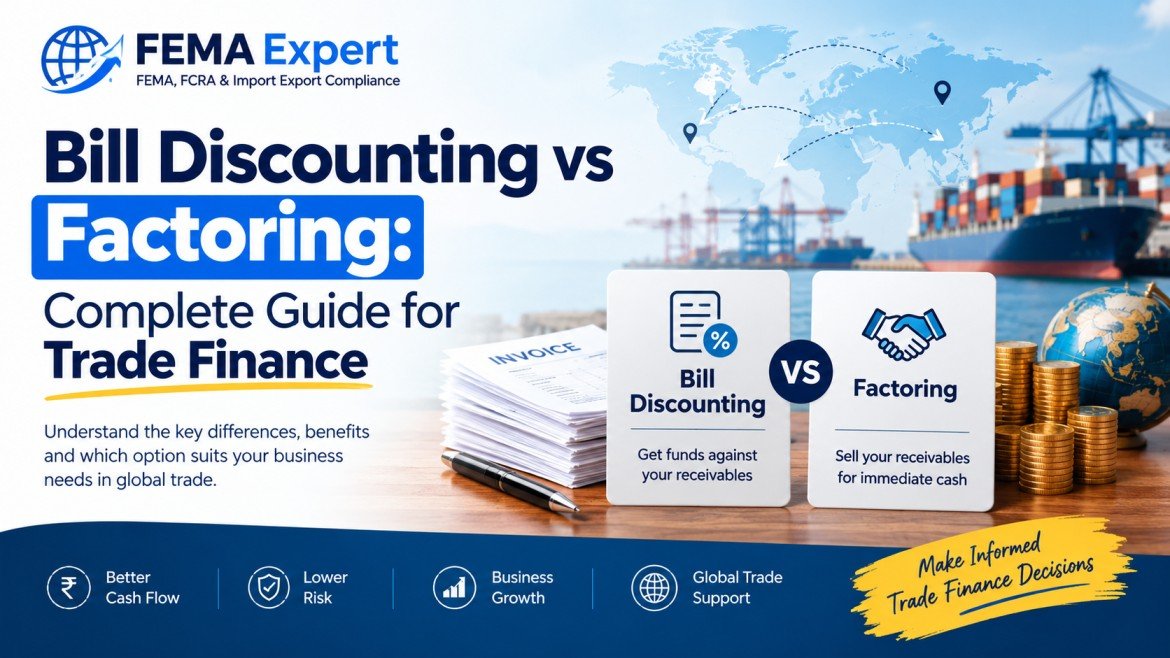
Bill discounting turns an unpaid invoice into cash today. A bank buys your bill before it’s due. They pay you a bit less than the full value. That gap is their fee.
You don’t wait for your buyer. The lender does. On the due date, they collect payment directly from your buyer.
You make a sale. You raise an invoice with credit terms. Then you take that invoice to a lender, instead of waiting out the credit period.
The lender checks two things. Your buyer’s credit history. And whether the invoice is genuine. Once satisfied, they pay you upfront, minus their fee. They collect full payment from your buyer later.
Step 1: Raise the invoice. Complete your sale. Generate a bill with payment terms attached.
Step 2: Approach a lender. Take this invoice to a bank or NBFC offering this service.
Step 3: Lender verification. They check your buyer’s credit. They confirm the invoice is real.
Step 4: Receive discounted payment. Funds land in your account. The discount fee is already deducted.
Step 5: Lender collects on due date. They recover full payment from your buyer when it’s due.
Say your invoice is worth Rs. 5 lakh. Payment is due in 90 days. You need cash now. A lender offers to discount it at 12% annual interest.
Over 90 days, that’s roughly Rs. 15,000 in charges. You get close to Rs. 4.85 lakh right away. The lender collects the full Rs. 5 lakh from your buyer after 90 days.
Rates vary by lender, buyer credit profile, and invoice tenure. Shorter tenures and stronger buyer credit typically mean lower discount rates. It’s helpful to compare a few lenders before deciding. A small rate difference can add up with larger invoices.
| Basis | Bill Discounting | Invoice Factoring |
| Collections | Handled by you, mostly | Handled by the factor |
| Ledger control | Stays with your business | Shifts to the factor |
| Buyer awareness | Often kept confidential | Buyer usually knows |
| Default risk | Often stays with you | Often shifts to the factor |
An LC protects you before a deal closes. It reduces payment risk upfront. Bill discounting addresses a different issue: it helps you get cash quickly after a sale. Many exporters use both methods. They secure the deal with an LC and then use bill discounting to get funds quickly. This way, they don’t have to wait for the LC’s payment terms to mature.
Exporters often deal with long payment cycles, sometimes 60, 90, or even 120 days. Exporters can get working capital by discounting bills tied to export invoices. This is especially true for those backed by a Letter of Credit. This means they don’t have to wait for the overseas buyer to complete their payment cycle.
FEMA Expert helps exporters and importers structure trade finance arrangements. This includes documentation that supports bill discounting against export invoices.
Trade finance often connects to wider compliance needs. Our FEMA advisory team can help there. Our FDI consultant in India services support the regulatory side of your business too.
Want to improve your working capital cycle? Talk to FEMA Expert.
Bill discounting helps businesses access cash from unpaid invoices. This way, they don’t have to wait through long credit cycles. Knowing the process and costs is important. Comparing options like factoring or a Letter of Credit is helpful. This way, you can find what fits your working capital needs best. If you need trade finance for your export business, the FEMA Expert team is here to help. They will find the best structure for you.
1. What is bill discounting?
It’s a way to get cash fast. A bank or lender buys your unpaid invoice before it’s due. They pay you upfront, but take a discount fee.
2. How is bill discounting different from factoring?
In bill discounting, you handle collections, so the buyer may not know about the lender. In factoring, the factor handles collections directly.
3. Is collateral required for bill discounting?
The invoice itself is usually the main security. Exact requirements vary by lender.
4. What documents are needed for bill discounting?
A valid invoice, delivery proof, buyer acceptance, and standard KYC documents.
5. Can exporters use bill discounting?
Yes. It’s common against export invoices, especially those backed by a Letter of Credit.
6. What happens if the buyer defaults?
Under recourse discounting, you stay liable. Under non-recourse discounting, the lender absorbs that risk.
7. What is the difference between bill discounting and a Letter of Credit?
An LC reduces payment risk before the deal. Bill discounting gives you cash faster after the invoice is raised.
8. How can FEMA Expert help with trade finance?
We help structure trade finance documentation. We also support broader FEMA and investment compliance linked to your export business.