
An exporter once landed a large order but had no funds to buy raw materials upfront. The buyer’s payment would only come after shipment. He almost turned the order down.
That’s exactly the gap packing credit fills. This guide covers what is packing credit, how it works, and how exporters actually use it.
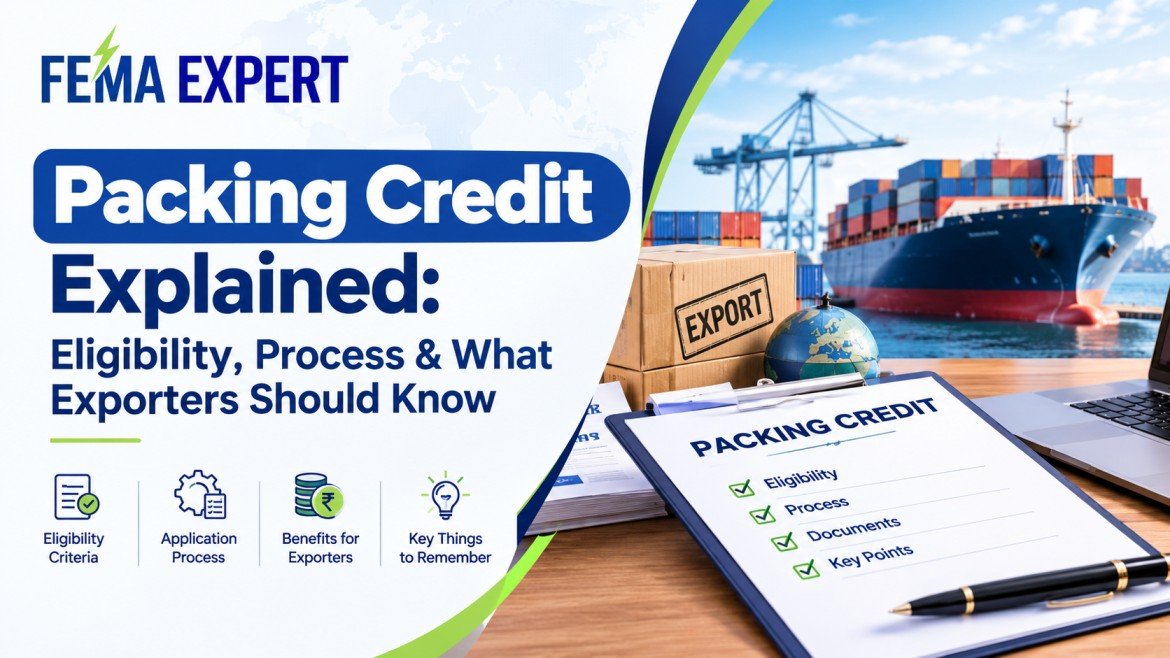
Packing credit adviosry is a loan banks give exporters before goods are shipped. It covers the cost of buying raw materials, processing, manufacturing, and packing goods for export.
This is also called pre-shipment finance. Banks extend it against a confirmed export order or a Letter of Credit issued in the exporter’s favour. Without this upfront cash, many exporters would struggle to fulfil large orders on time.
An exporter receives a confirmed order or an LC from a foreign buyer. They approach their bank with this document, along with a request for pre-shipment funding.
The bank sanctions a loan based on the order value, exporter’s track record, and bank policy. These funds cover costs from procurement to packing, right up until the goods are ready to ship.
| Basis | Packing Credit | Post-Shipment Credit |
|---|---|---|
| Stage | Before shipment | After shipment |
| Purpose | Fund procurement, manufacturing, packing | Fund receivables until buyer pays |
| Repayment source | Export proceeds, once shipped | Collection of the export bill |
| Risk covered | Production and fulfilment risk | Buyer payment delay risk |
Both work together, covering an exporter’s cash flow from order to final payment.
Packing Credit can also be availed in foreign currency, known as PCFC. This lets exporters borrow in a foreign currency instead of rupees, often reducing currency conversion costs and interest rate exposure tied to domestic rates.
Exporters dealing with large, foreign-currency-denominated orders often prefer this route for better cost predictability.
This loan has a natural closing point. Once goods are shipped and the export bills land with the bank, the credit gets squared off.
Proceeds from these bills, whether through negotiation, purchase, or discounting of the export bill, are used to settle the packing credit. Banks monitor this closely to ensure the credit was genuinely used for its intended export purpose.
Packing credit typically carries a lower interest rate compared to regular working capital loans. This concessional pricing exists specifically to support export competitiveness.
Rates vary by bank and exporter profile, so it’s worth comparing offers, especially for exporters with a strong repayment history who can often negotiate better terms.
At FEMA Expert, we help exporters understand how packing credit fits into their broader export compliance, alongside documentation like IEC, AD Code, and Letter of Credit requirements.
Since export finance often overlaps with foreign exchange compliance, our FEMA advisory team, including our RBI and LRS remittance consultant services, supports exporters managing the full cross-border transaction cycle.
Need guidance on structuring your export finance correctly? Reach out to FEMA Expert today.
Packing credit gives exporters the working capital they need to fulfil orders without waiting for buyer payment. Understanding eligibility, documentation, and how it connects to post-shipment credit helps exporters plan their cash flow with more confidence.
If you need guidance on export finance or related FEMA
1. What is packing credit?
It’s a pre-shipment loan banks give exporters to cover the cost of procuring, manufacturing, and packing goods before they’re shipped.
2. Who is eligible for packing credit?
Existing bank customers, new exporting units, and businesses taking over an existing facility from another bank with a good track record.
3. What is the difference between packing credit and post-shipment credit?
Packing credit funds the business before shipment, while post-shipment credit funds the gap between shipment and receiving buyer payment.
4. What is PCFC in export finance?
Packing Credit in Foreign Currency, which lets exporters borrow in foreign currency instead of rupees, often reducing currency and interest cost exposure.
5. How is packing credit repaid?
It’s liquidated once the exporter ships goods and submits export bills, with proceeds from those bills settling the loan.
6. Is packing credit available to service exporters?
Yes, it’s not limited to goods manufacturers and can support service-based export businesses too.
7. What documents are needed to apply for packing credit?
A confirmed export order or LC, IEC certificate, export contract, KYC documents, and AD Code details.
8. How can FEMA Expert help with export finance compliance?
We help exporters align packing credit and related trade finance with broader FEMA documentation and compliance requirements.