
A founder once agreed to sell shares to a foreign investor at a discount. The deal felt fair to both sides. Then the FC-TRS filing got rejected. The price broke a FEMA rule neither of them knew existed.
This happens more than people expect. This guide covers FC-TRS filing, the pricing rules behind it, and where deals commonly go wrong.
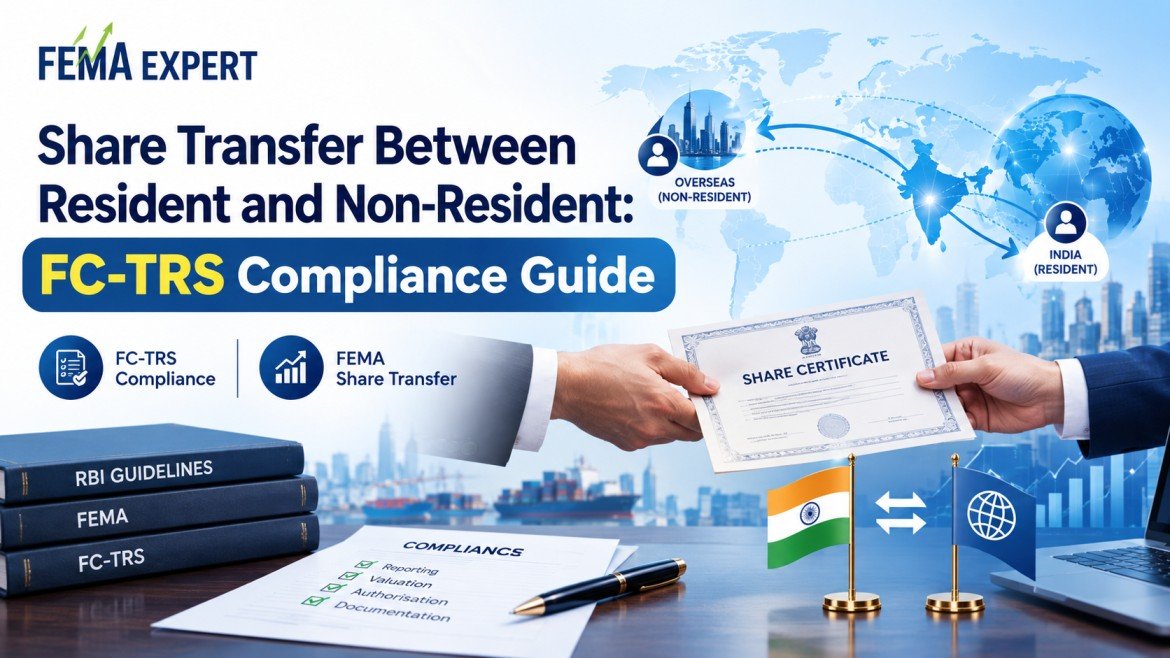
FC-TRS filing is the paperwork RBI expects whenever a capital instrument changes hands across the resident/non-resident line. Not new shares being created, just existing ones moving from one owner to another.
Think secondary sales. Think investor exits. Think a founder buying back shares from an early foreign backer. All of these trigger FC-TRS.
Both sale transactions and gift transfers fall under this scope, as long as one party is resident and the other isn’t.
The resident party carries this responsibility. If a resident is selling, the resident seller files. If a resident is buying, the resident buyer files.
This matters for deal planning. Even when a foreign investor pushes for a quick exit, it’s the Indian party who ends up managing the filing. Build this into your transaction timeline early.
Pricing is where most FC-TRS transactions run into trouble. The rule works differently depending on which direction the shares move.
When a resident sells to a non-resident, the price can’t fall below fair value. That fair value has to come out of a proper valuation exercise, following a globally recognised approach where neither side gets a special deal.
You can sell at fair value. You can sell above it. You can’t sell below it. A discounted sale to a foreign buyer, even if commercially justified, breaks this rule.
Flip the direction, and the rule flips too. When a non-resident sells to a resident, the price can’t exceed fair value.
This is exactly why guaranteed minimum return clauses for foreign investors create problems. If an investor’s exit price ends up above fair value at the time of transfer, the deal can’t legally proceed at that price.
For CCPS and CCDs, the conversion price gets fixed at issuance. On transfer, the price can’t fall below the fair value that existed when the instrument was originally issued. Bonus issues or stock splits may adjust the ratio, but this underlying constraint carries through.
Investors connected to certain neighbouring countries face additional scrutiny before a transfer can proceed. If a seller or buyer in your transaction has beneficial ownership tied to one of these countries, government approval may be required before FC-TRS can even be filed.
This rule and its thresholds get revised periodically. Always verify the current requirement against the latest DPIIT press notes before assuming your transaction is exempt.
FC-TRS must be filed within 60 days. The clock starts from the date of transfer or the date consideration is received, whichever happens first.
Many people wait for the final payment to arrive before starting the process. That’s a mistake. If the transfer deed was signed before the payment landed, the clock already started earlier than you think.
Missing the deadline doesn’t mean disaster, but it does mean cost.
A Late Submission Fee applies for delays within a set window, generally calculated as a base amount plus a small percentage of the transaction value, scaled by how long the delay ran. This route is faster and self-initiated.
Beyond that window, or where the issue is substantive rather than just a missed deadline (like an incorrect price), compounding becomes necessary. This is a formal process with the RBI, involving an application, a hearing, and a compounding order. It takes longer and creates a more visible compliance record.
FC-TRS handles the FEMA side. Tax compliance runs on a separate, parallel track.
When a resident buys shares from a non-resident, the buyer must deduct TDS under Section 195 before remitting payment. This isn’t something you can go back and fix after the fact. Banks typically check this before clearing the FC-TRS filing.
The FEMA floor price rule and income tax’s deemed consideration rule reinforce each other here. Selling below fair value to a non-resident risks breaking FEMA rules and triggering a higher deemed capital gain for tax purposes, even though less cash actually changed hands.
| Basis | FC-TRS | FC-GPR |
|---|---|---|
| Nature | Secondary transfer of existing shares | Fresh issuance of new shares |
| Filing deadline | 60 days from transfer or funds received | 30 days from allotment |
| Filed by | Resident buyer or seller | The investee company |
| Valuation needed | Yes, within 90 days | Yes, at time of allotment |
At FEMA Expert, we help resident buyers and sellers get their FC-TRS pricing, documentation, and timelines right before deal terms get locked in, not after a filing gets rejected.
Our broader FEMA advisory team also supports the tax and structuring side of these transactions, so your share transfer stays compliant across both FEMA and income tax requirements.
Structuring a share transfer with a foreign party? Reach out to FEMA Expert before you finalise the price.
FC-TRS compliance isn’t just about filing a form on time. The pricing rules, the approval requirements, and the tax obligations running alongside it can all derail a transaction if they’re missed. Getting a FEMA review done before the deal terms are finalised saves far more time than fixing a rejected filing later.
If you’re planning a share transfer involving a non-resident, FEMA Expert’s team can help you structure it correctly from the start.
1. What is FC-TRS filing?
It’s the FEMA reporting requirement for transferring existing shares or convertible instruments between a resident and a non-resident.
2. What is the FC-TRS filing deadline?
60 days from the date of transfer or the date consideration is received, whichever comes first.
3. Can a resident sell shares to a foreign investor at a discount?
No, a resident seller can’t price below fair value when selling to a non-resident. That price floor is a firm FEMA rule.
4. What happens if FC-TRS is filed late?
A Late Submission Fee applies within a certain window. Beyond that, or for substantive violations, the matter needs to go through compounding.
5. Who deducts TDS in a share transfer involving a non-resident?
The resident buyer deducts TDS under Section 195 before remitting payment to a non-resident seller.
6. Is FC-TRS required for a gift of shares to an NRI relative?
Yes, gift transfers between a resident and a non-resident still require FC-TRS, along with additional supporting documents.
7. What is the difference between FC-TRS and FC-GPR?
FC-TRS covers secondary transfers of existing shares, while FC-GPR covers fresh share issuance to a non-resident investor.
8. How can FEMA Expert help with FC-TRS compliance?
We help structure the transaction pricing correctly, prepare documentation, and manage the filing timeline to avoid penalties or rejected applications.