
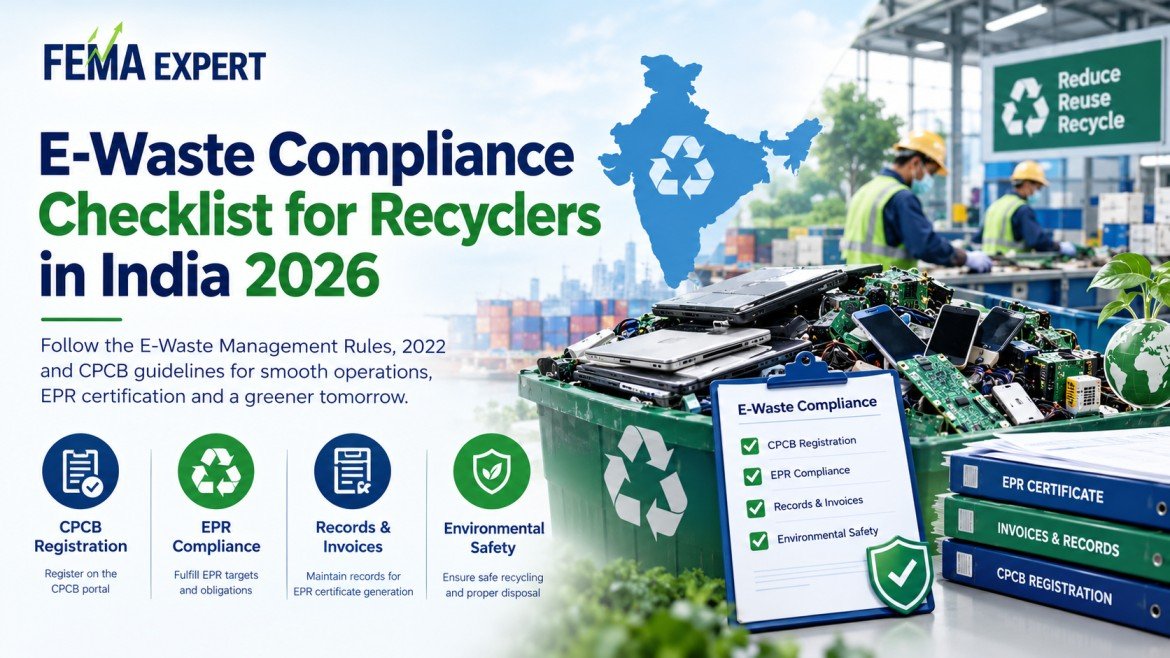
A new recycling business once started operations without CPCB registration. They didn’t know it was mandatory first. Their entire facility got shut down within weeks.
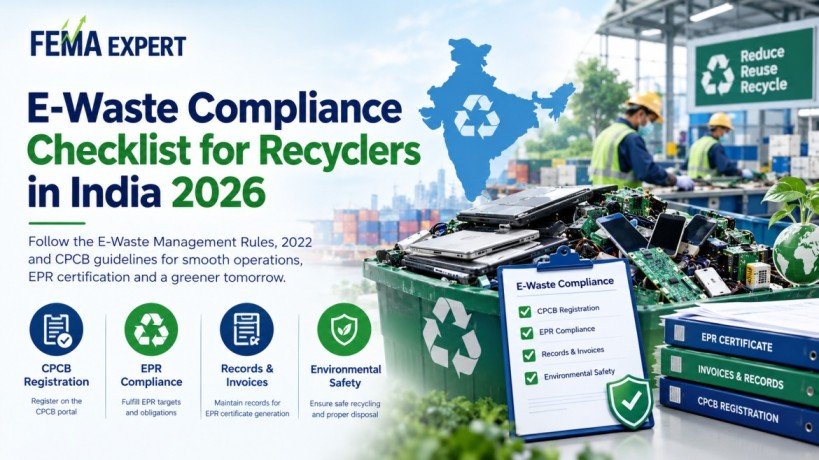
This mistake is avoidable. This guide covers the e-waste compliance checklist every recycler needs to follow in 2026.
The E-Waste (Management) Rules come from the Ministry of Environment, Forest and Climate Change. The Central Pollution Control Board, or CPCB, handles day-to-day implementation.
These rules exist to move waste away from unsafe, informal handling. They push it into a system that’s traceable and accountable.
Registration comes first. Always. No recycling activity is legal without it.
Skipping this step, or starting operations before approval, puts your entire business at risk.
Your facility needs proper design from day one. This isn’t optional infrastructure.
CPCB inspects facilities against these standards before granting or renewing registration.
EPR certificates are how recyclers prove they’ve processed e-waste properly. Only CPCB-registered recyclers can generate them.
These certificates get tied to verified recycled quantities. Producers then purchase these certificates to meet their own recycling obligations. This connects your work directly to producer compliance across the industry.
Keep everything organised. Auditors check documentation closely, and gaps here create real problems.
Filing isn’t a one-time task. It’s ongoing.
Recyclers must submit quarterly and annual returns through the EPR portal. These returns report your processing volumes, certificate generation, and compliance status for the period.
Missing these deadlines can affect your registration status, even if your actual recycling work is sound.
Producers rely on registered recyclers to meet their own annual targets. This creates a direct business relationship.
Only work with entities that verify your CPCB registration properly. And ensure your certificate generation reflects actual, verified recycling activity, not just paperwork.
CPCB and State Pollution Control Boards conduct audits regularly. These check your facility against registered standards.
Non-compliance carries real consequences. Facilities can face:
E-waste compliance for recyclers involves a few key steps:
Following this checklist keeps your operations legal and your certificates credible.
1. E-Waste Compliance Checklist for Recyclers:?
2. Is CPCB registration mandatory for e-waste recyclers?
Yes, you must have valid CPCB registration to recycle legally.
3. Recyclers create EPR certificates using a set process?
Only CPCB-registered recyclers can issue these certificates. They show the verified amounts of e-waste processed.
4. What documents must recyclers maintain? \
Collection records, processing records, end-product records, invoices, and certificate generation documentation.
5. Recyclers need to file returns quarterly and annually.
They do this through the EPR portal, where they report processing and compliance data.
6. What happens during a CPCB audit?
Inspectors review your facility, documentation, and certificate accuracy against actual processing output.
7. What are the penalties for non-compliant recyclers?
8. Yes, recyclers can work with any producer.
Producers often check a recycler’s CPCB registration before trusting their EPR certificates.