



An exporter once called us, confused about why her GST refund was stuck. Her shipping bill was filed. Her goods had left the port. But one document was still missing on the customs side, one she’d never even heard of.
That document was the Export General Manifest, or EGM. It’s not something exporters file themselves, but not knowing how it works can still cost you time and money.
This guide covers what is EGM in export, who files it, and why it matters for your refunds.
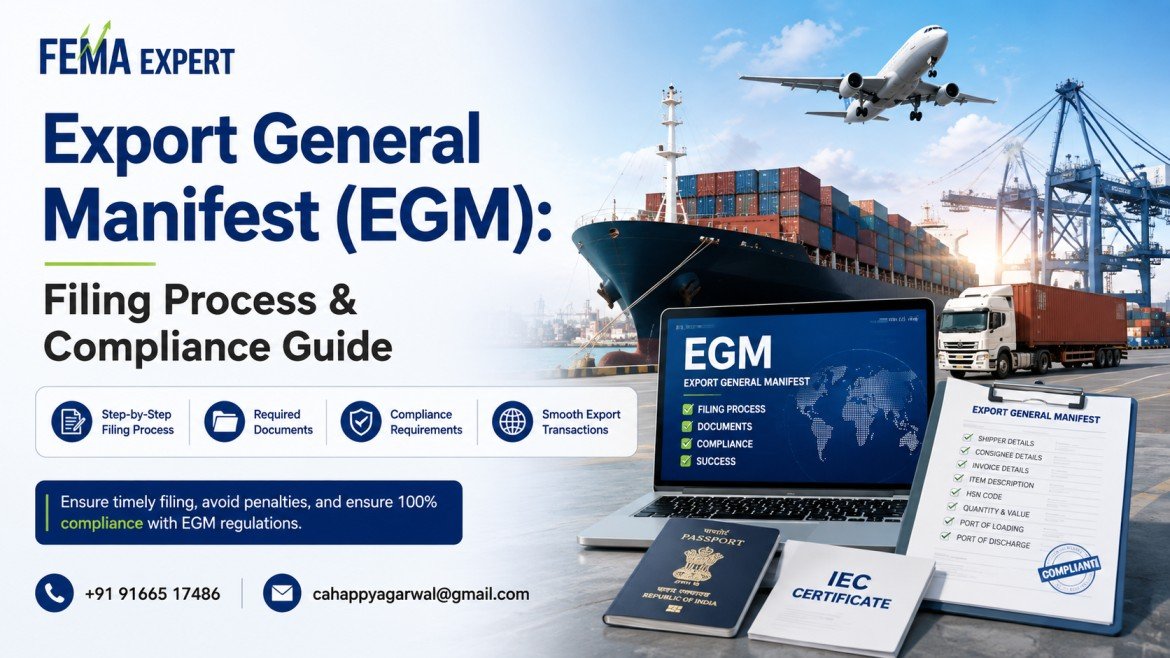
EGM full form is Export General Manifest. It’s a document filed by the carrier, meaning the shipping line or airline, confirming that your goods have actually left India.
Think of it as final proof of export. Your shipping bill gets you customs clearance before departure. The EGM confirms departure actually happened.
This is sometimes discussed alongside the import general manifest meaning. Where EGM covers exports leaving India, the import general manifest covers goods entering India. Both work on the same principle, just in opposite directions.
EGM filing is a legal requirement under the Customs Act, 1962. It’s not optional paperwork. Carriers must file it after the vessel or aircraft departs, and Customs uses it to formally close out the export transaction.
From our experience working with exporters, most people don’t realise how much depends on this one document until a refund gets delayed.
The carrier is primarily responsible. The carrier is the shipping line, airline, or the person in charge of the vessel or plane.
Carriers often choose authorised agents. These include freight forwarders and Customs House Agents. They handle this task for the carriers. As an exporter, you don’t file the EGM. Sharing accurate shipment details with your carrier ensures a successful filing.
Delays can slow down your refund, so check with your carrier to ensure it was filed on time.
Form I: General Declaration
Covers the basic voyage or flight details, port of clearance, and a summary of the exported goods.
Form II: Passenger Manifest
Used for mixed cargo-passenger carriers, recording passenger and currency details on board.
Form III: Cargo Manifest & Private Property List
The core form has cargo details. It also includes consignor and consignee information. Lastly, it lists shipping bill numbers.
Form IV: Private Property List (Aircraft)
Used specifically for aircraft, recording personal belongings of the captain and crew.
EGM filing happens through ICEGATE EGM submission, the customs electronic portal. Here’s the general flow:
If you want to check egm details for your shipment, you can do this through ICEGATE:
Exporters often use this to find how to get EGM details for export, especially if there is a delay in a refund. They want to confirm if the EGM has closed.
| Basis | Shipping Bill | EGM |
| Timing | Filed before shipment departs | Filed after shipment departs |
| Filed by | Exporter or their agent | Carrier or authorised agent |
| Purpose | Gets customs clearance for export | Confirms goods actually left India |
| Role in refunds | Starting point of the export process | Required to close the loop for GST refund and drawback |
Some businesses look for the egm shipping bill together. These two documents go hand in hand. One begins the export process, and the other completes it.
At FEMA Expert, we help exporters stay on top of the documentation that sits behind smooth GST refunds and duty drawback claims, including coordinating around EGM status, shipping bill closure, and related export compliance.
If your business focuses on cross-border investment, we can help. Our FDI consultant in India team is ready to assist with exports too. By partnering with us, your team can manage foreign trade. You can also handle investment duties. All of this is done through one contact.
Facing a delayed refund tied to EGM issues? Reach out to FEMA Expert to get it sorted.
The Export General Manifest isn’t filed by you, but it affects your refund process. They can either move smoothly or get stuck. Knowing what is EGM helps you. It’s also important to know who’s in charge. Checking its status is key. This way, you can handle problems better when things go wrong. Is a delayed refund or export compliance issue slowing your business? FEMA Expert’s team can help you fix it.
1. What is EGM in export?
Export General Manifest is a document filed by the carrier confirming that exported goods have officially left India, required to close the shipping bill.
2. What is the EGM full form in export?
Export General Manifest. It’s filed under the Customs Act, 1962 by the shipping line or airline after departure.
3. Does EGM mean something different in a company context?
Yes, in company law, EGM full form in company context stands for Extraordinary General Meeting. This is not related to the export document mentioned here.
4. Who files the EGM?
The carrier is responsible for this. The carrier can be a shipping line, an airline, or their agent.
5. How can I check EGM details for my export shipment?
You can check status through ICEGATE’s Job Status section, by selecting AIR EGM or SEA EGM and entering your shipping bill details.
6. What is the difference between EGM and shipping bill?
The shipping bill is filed before shipment for customs clearance. The EGM is filed after departure to confirm the goods left India.
7. What happens if EGM filing is delayed?
It can delay your GST refund, duty drawback, and RoDTEP claims, and may leave your shipping bill open in the customs system.
8. How can FEMA Expert help with EGM-related compliance issues?
We help exporters track documentation gaps behind delayed refunds and coordinate with carriers and customs processes, alongside broader FEMA and FDI compliance support.