


A trust that had been running a school for underprivileged children for six years once came to us after a foreign foundation offered them a grant. They were thrilled, until they realised they had no way to legally accept the money. Without FCRA registration, that grant simply couldn’t be received, no matter how good the cause was.
This happens more often than people expect. Many NGOs assume that any donation, foreign or domestic, can be accepted the same way. It can’t. Foreign contributions are governed by a completely separate law, and getting registered before you need the money is far easier than scrambling for approval after a donor is already waiting.
This guide covers what FCRA registration actually involves, who qualifies, and what happens after you’re approved.
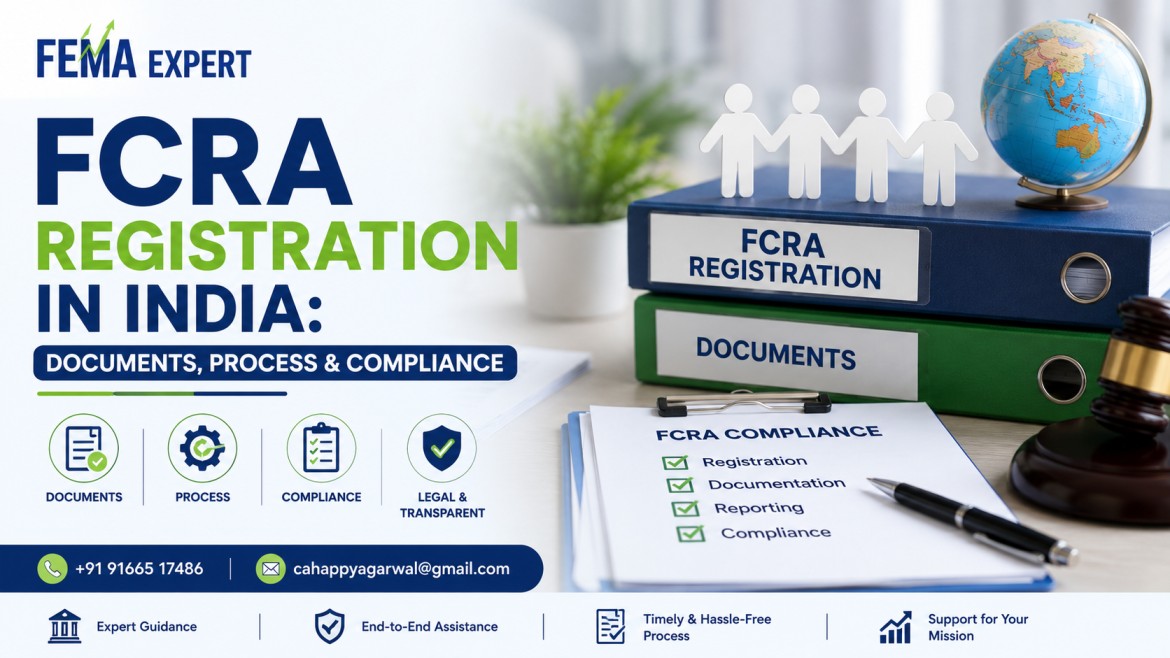
FCRA registration is the certification an Indian NGO, trust, society, or Section 8 company needs before it can legally receive contributions from a foreign source. It is granted by the Ministry of Home Affairs under the Foreign Contribution (Regulation) Act, and without it, accepting foreign funds is not permitted, regardless of the purpose behind the donation.
In practice, this certification is what separates an organisation that can pursue international funding from one that’s limited to domestic sources only.
The FCRA act exists because foreign money entering the country needs to be tracked, and its use accounted for. From our experience advising NGOs, the reasoning behind this becomes clear once you see how registration protects the organisation itself, not just the regulator.
This is for groups that have been around for some time and meet the requirements. Once granted, it allows you to receive foreign contributions without interruption. You don’t need approval for each donation.
This route suits newer organisations that don’t yet qualify for normal registration but have a specific foreign donor lined up for a defined project. Approval here is tied to that one donor and that one purpose, not a general licence to receive funds from anywhere.
| Basis | Normal Registration | Prior Permission |
| Suitable for | Established organisations | Newer organisations |
| Scope | Ongoing, from any approved source | One donor, one project |
| Minimum activity period | Typically 3 years | Not mandatory |
| Validity | 5 years | Project-specific |
Step 1: Submit Online Application (Form FC-3/FC-3A)
You can file your application online. Use the MHA’s FCRA portal. Use Form FC-3 for new registration or FC-3A for renewals.
Step 2: Complete the application with precision.
Every field must exactly match the supporting documents. Even small mismatches can delay processing.
Step 3: Prepare Supporting Documents
Collect your financial statements, activity reports, and organizational documents.
The Ministry checks the application and documents. It may ask for clarifications or more information before moving forward.
Once verification is complete, the MHA issues the registration, after which the organisation can legally begin receiving foreign contributions.
FCRA registration is valid for five years from the date it’s granted. The application for renewal of FCRA registration needs to go in before that window closes, otherwise the organisation simply can’t accept foreign funds until it’s renewed. Before submitting the application, it’s worth checking that annual returns for the preceding years have been filed correctly, as gaps here can affect renewal approval.
FCRA annual filing is the yearly return every registered organisation must submit to the MHA, reporting the foreign contributions received and how those funds were utilised during the financial year. It applies whether or not the organisation actually received any foreign funds in that period, and missing it can affect both compliance standing and future renewal.
Form FC-4 is the specific form used for this annual reporting. It requires details of the contributions received, the sources they came from, and a breakdown of how the money was spent against the organisation’s stated purposes. From our experience, organisations that maintain clean, itemised records through the year find this filing far less stressful than those scrambling at year-end.
The annual return on Form FC-4 is due by December 31. It covers the financial year that ended on March 31. Organizations should check the latest MHA notifications. This will confirm the current deadline before filing. This is important because the MHA can change compliance timelines.
| Document | Purpose |
| Bank statement of FCRA account | Confirms actual receipts and utilisation |
| Income and expenditure statement | Shows how funds were used |
| Balance sheet | Reflects the organisation’s financial position |
| Auditor’s certificate | Certifies the accuracy of financial disclosures |
| Details of foreign donors | Identifies the source of each contribution |
Given how serious these consequences can be, organisations should consult a qualified professional before a filing deadline is missed, not after.
At FEMA Expert, our team supports NGOs, trusts, and Section 8 companies through the entire FCRA journey, from assessing eligibility and preparing the FC-3 application, to annual FC-4 filing and renewal. We also provide broader FEMA advisory for organisations that deal with cross-border transactions beyond foreign contributions.
If your organisation is planning to accept foreign funding or needs to get its FCRA compliance in order, our team can walk you through it step by step. Reach out to FEMA Expert to get started.
FCRA registration is key. It decides if an NGO can get international support. Ensuring eligibility, proper documentation, and timely annual filings keeps the organization compliant. This also boosts credibility with donors. Check the latest MHA notifications to verify current FCRA rules. They get updated often, so it’s important to stay informed before filing.
1. What is the full form of FCRA?
FCRA means the Foreign Contribution (Regulation) Act. This law controls how Indian organizations can accept money from foreign sources.
2. What is FCRA license?
It’s another term commonly used for FCRA registration, the certification issued by the MHA that authorises an organisation to receive foreign contributions.
3. How do I complete FCRA online registration?
Applications are filed through the MHA’s FCRA portal using Form FC-3, along with supporting documents like financial statements and organisational details.
4. Is FCRA login required for filing?
Yes, organizations must log in to the FCRA portal. Use your registered credentials to file applications, annual returns, and renewal requests.
5. Who is eligible for FCRA registration in India?
Societies, trusts, and Section 8 companies need to meet three main criteria:
6. What occurs if you miss the FCRA annual filing?
It can cause penalties, suspension risk, and issues when renewing. It’s best to seek professional help without delay.
7. How long is FCRA registration valid?
Five years from the date of grant, after which renewal must be applied for to continue receiving foreign contributions.
8. Can a newly formed NGO receive foreign funds?
Yes, Prior Permission lets a new organization get funds. This is for a specific project from a donor. This can happen even before the organization qualifies for regular registration.