
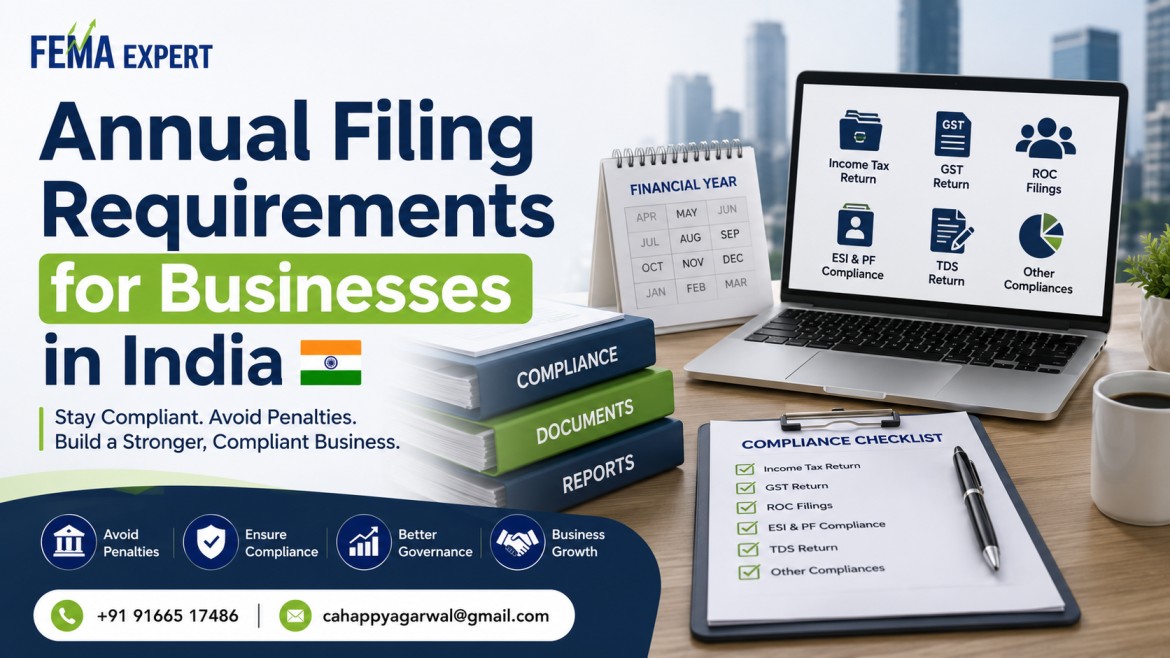
Annual Filing Requirements for Businesses in India
Govind Saini

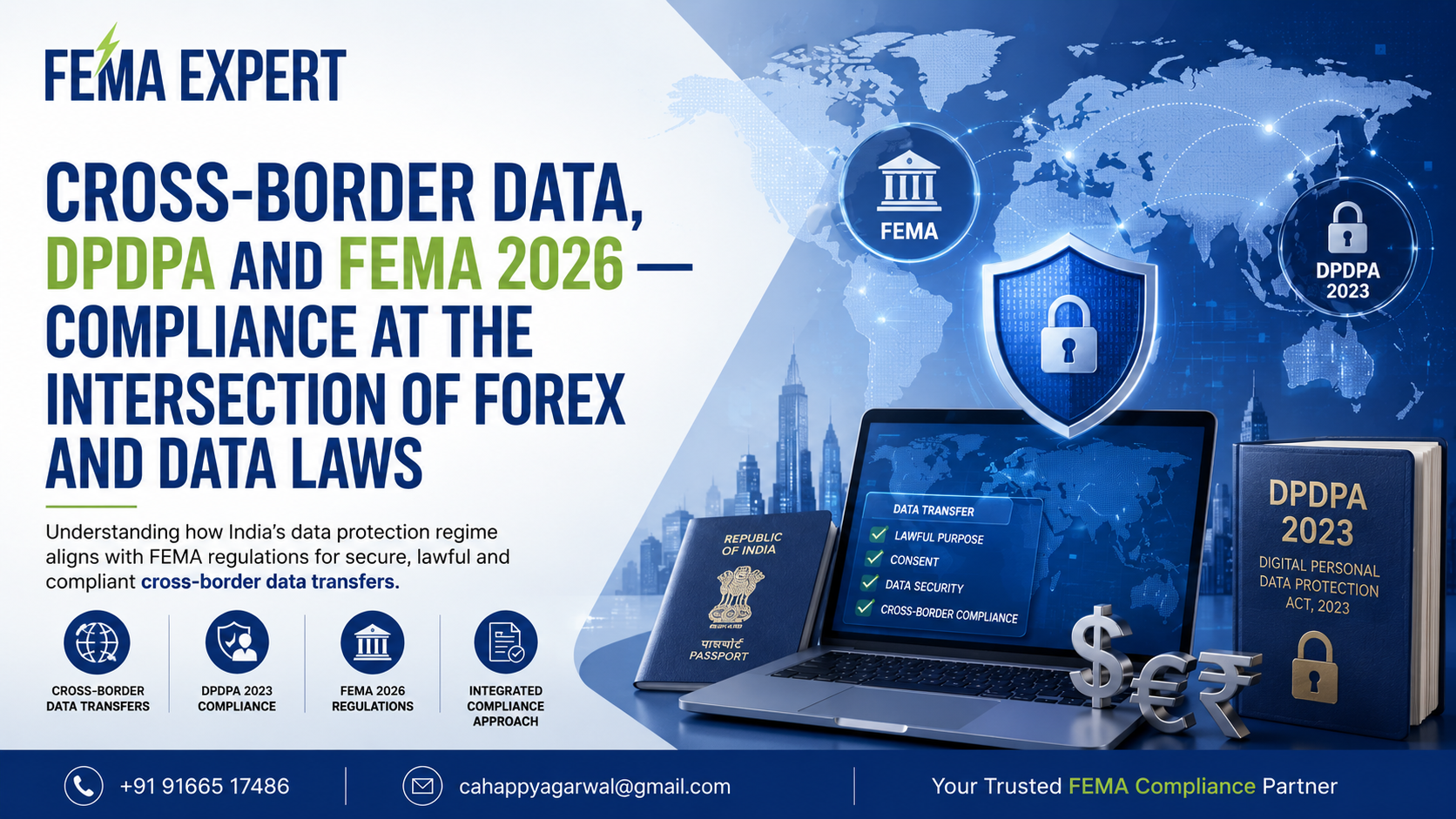
Today’s businesses function in an increasingly interconnected digital world. An Indian company may provide software development services to clients in the United States, process customer data stored in Europe, and receive payments from Singapore. While these global business activities create growth opportunities, they also introduce compliance responsibilities.
In 2026, two important regulations are shaping international business operations in India: the Digital Personal Data Protection Act (DPDPA) and the Foreign Exchange Management Act (FEMA). While DPDPA focuses on the protection and transfer of personal data, FEMA governs foreign exchange transactions and cross-border payments.
Many businesses focus on one regulation while overlooking the other. However, companies handling international clients, overseas payments, and cross-border data transfers must understand how both laws work together. This is where guidance from a qualified FEMA expert or experienced FEMA consultants can help businesses avoid costly compliance mistakes.
Cross-border data transfer refers to the movement of data from one country to another. This can happen when:
With digital services becoming increasingly global, cross-border data transfers have become a routine business activity. However, businesses must ensure that personal data is handled securely and in accordance with applicable laws.
Failure to manage cross-border data properly can expose companies to regulatory risks, legal liabilities, and reputational damage.
The Digital Personal Data Protection Act (DPDPA) is India’s primary law for protecting personal data. It establishes rules regarding how organizations collect, process, store, and transfer personal information.
The objective of DPDPA is to:
Under DPDPA, businesses must ensure that personal data is processed lawfully and that adequate safeguards are maintained when handling customer, employee, or user information.
Organizations dealing with international customers should carefully assess how personal data moves across borders and whether their data processing practices align with regulatory expectations.
While DPDPA focuses on data, FEMA regulates foreign exchange transactions involving India.
FEMA applies to various cross-border business activities, including:
For service exporters such as IT companies, consultants, SaaS providers, legal firms, and BPO operators, FEMA compliance is a critical aspect of business operations.
Companies must ensure that export proceeds are received through authorized banking channels and that all foreign exchange transactions are properly documented.
Many organizations seek assistance from FEMA consultants to ensure compliance with RBI regulations and avoid reporting errors.
At first glance, DPDPA and FEMA may appear unrelated. However, they often overlap in modern business operations.
Consider an Indian SaaS company serving overseas customers:
In such cases, the company must comply with both data protection obligations under DPDPA and foreign exchange regulations under FEMA.
This intersection becomes particularly important for businesses involved in technology, consulting, outsourcing, software development, digital marketing, and professional services.
Service exporters often focus heavily on client acquisition and project delivery while underestimating compliance risks.
Ignoring DPDPA requirements may result in data governance issues, while overlooking FEMA regulations can lead to difficulties related to foreign exchange realization, documentation, and reporting.
Businesses should ensure:
Working with a FEMA expert can help businesses create compliance systems that support both operational efficiency and regulatory compliance.
Businesses must understand where data is stored and processed. Uncontrolled international data movement may create compliance concerns.
Organizations handling customer information from multiple jurisdictions should implement strong privacy and security controls.
Incomplete records relating to export transactions and foreign remittances can lead to compliance issues under FEMA.
Third-party service providers may process data or facilitate transactions on behalf of the business. Companies should conduct due diligence before sharing data or relying on external vendors.
As global business operations continue to expand, compliance can no longer be viewed through a single regulatory lens. Businesses must understand both the data protection requirements of DPDPA and the foreign exchange obligations under FEMA.
Organizations that proactively manage cross-border data transfers, maintain proper documentation, and ensure compliance with international payment regulations are better positioned for sustainable growth.
Whether you are an IT company, SaaS provider, consultant, BPO operator, or professional service exporter, seeking guidance from experienced FEMA consultants and a qualified FEMA expert can help you navigate the evolving compliance landscape with confidence.
DPDPA governs the protection and transfer of personal data, while FEMA regulates foreign exchange transactions. Businesses operating internationally may need to comply with both laws simultaneously.
Yes, cross-border data transfers are permitted subject to applicable provisions, restrictions, and government notifications under the DPDPA framework.
FEMA ensures that foreign exchange transactions, export proceeds, and international payments are conducted and reported in accordance with RBI regulations.
IT companies, SaaS businesses, BPOs, consulting firms, digital agencies, fintech companies, and other service exporters are commonly affected by both regulations.
Businesses should maintain proper documentation, monitor cross-border data transfers, track foreign remittances, and seek guidance from experienced FEMA consultants and compliance professionals when needed.