
A foreign-funded manufacturer once told us about his biggest headache. He had to pay full customs duty on imported machinery months before his plant even started production. His cash was blocked for no good reason.
His competitor wasn’t facing this problem. She had registered under the MOOWR scheme. She paid duty only when goods left the warehouse for the local market.
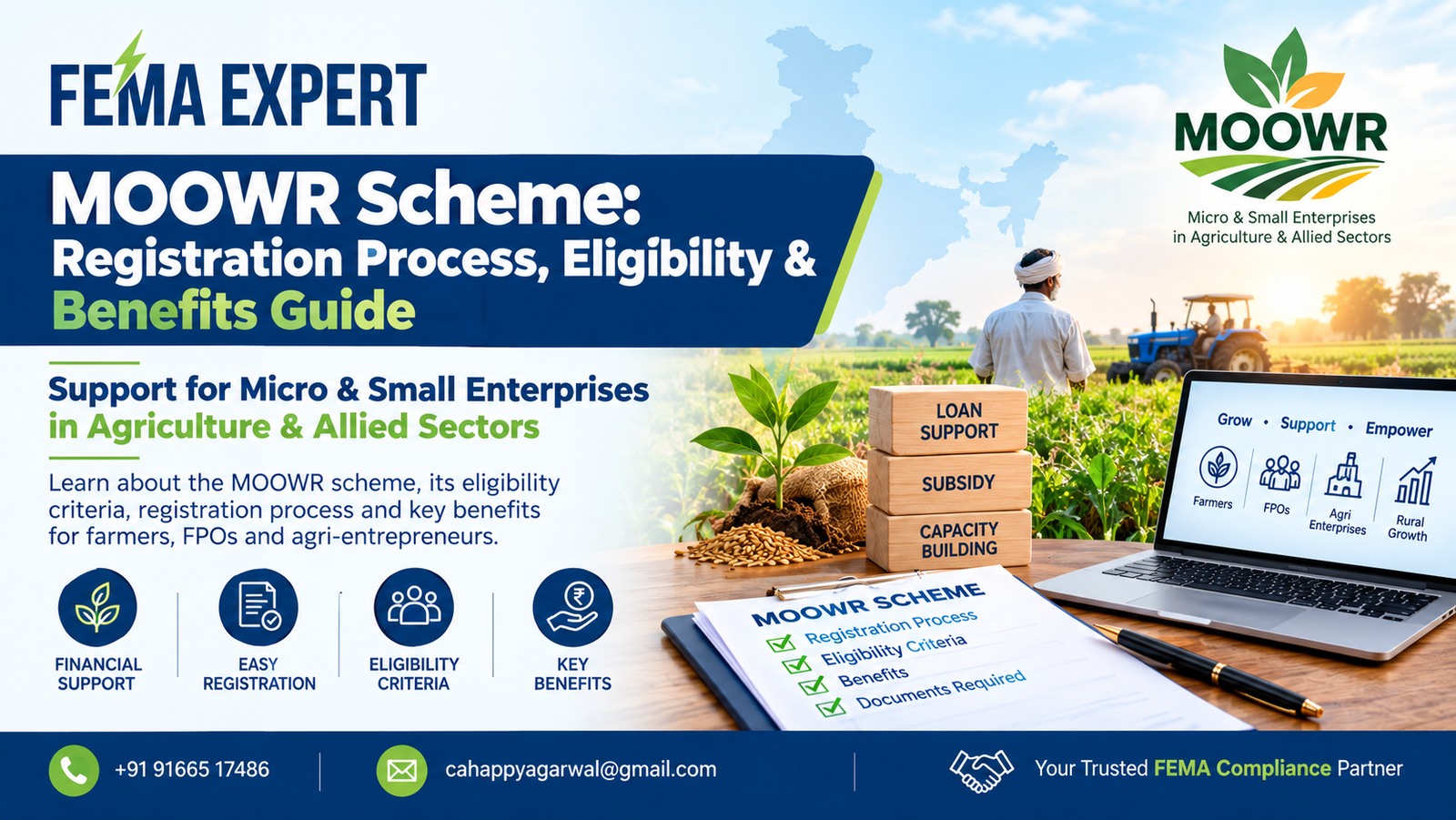
This guide explains what the scheme is, who can use it, and how MOOWR registration works step by step.
The MOOWR scheme lets a business import goods and keep them in a licensed bonded warehouse without paying customs duty upfront. Manufacturing and other operations can happen inside that warehouse.
Duty becomes payable only when the goods are cleared for sale in India. If the finished goods are exported, no duty is paid on them.
In simple words, it’s a duty deferment scheme. It protects your cash flow in the early, expensive stage of a business.
MOOWR scheme full form is Manufacture and Other Operations in Warehouse Regulations, 2019. The legal power for it comes from Section 65 of the Customs Act, 1962.
First, the warehouse gets its licence under Section 58 of the Act. Permission for manufacturing and other operations is then given under Section 65. Today, one combined application can cover both.
A valid GSTIN is the starting point of the application. The premises must also be fit to be licensed as a warehouse.
| Basis | MOOWR | EOU | IGCR |
|---|---|---|---|
| Main benefit | Duty deferment | Duty exemption | Concessed duty rate |
| Export obligation | Not fixed | Yes, Net Foreign Exchange condition | No |
| Domestic sale | Allowed on payment of duty | Allowed within limits | Based on end-use |
| Best for | Mixed domestic and export business | Mostly export businesses | Specific projects and industries |
Choosing the right scheme depends on your sales mix. Check your business model before you apply.
As per the latest customs circular, applications are filed on the ICEGATE 2.0 Warehouse Module. Always check the current CBIC circular before filing, since procedures change.
Open ICEGATE and choose fresh registration. Select the role of Warehouse Licensee. Type in your GSTIN, then confirm your mobile number and email with the OTPs you receive.
Keep all documents scanned and ready. The portal supports DigiLocker, so saved documents can be used directly.
This step causes the most delays. Your application goes to the customs officer linked to the port code you choose. Confirm your jurisdictional port first.
Fill in warehouse area, goods to be manufactured, and the planned operations. Self-declare your input-output norms. These norms affect the duty you pay later.
You promise to maintain digital records of goods received and removed. You also share them with the bond officer monthly. A bond is then executed in the prescribed format.
After submission, you get a Reference ID. Use it to track the application. When the officer asks a question, answer it on the portal itself with a clear comment.
A customs officer visits once to check your site. They look at security, fire safety, storage, and your inventory system. Everything on your layout plan must actually exist.
You must furnish a duty bond under Section 59. It is generally for an amount equal to three times the duty involved. As per current guidance, no bank guarantee is needed with it.
You must also keep an all-risk insurance policy. It should cover the deferred duty amount too.
One PAN holder can apply for licences at more than one location. Each warehouse gets its own ICEGATE ID. Multiple licences are possible even under one GSTIN.
Plan this early if you run several plants. Each site needs its own documents and verification.
Once your application is complete, the licence usually comes through in around two to three months. Delays usually come from missing documents or query replies.
Once granted, the licence generally has no fixed expiry. It stays valid unless it is cancelled or surrendered.
Getting the licence is only the start. You need to follow these rules afterwards:
Poor record keeping is the top reason units face problems later.
Many MOOWR units are set up with foreign money. This brings a second layer of rules under FEMA.
Your customs licence and your foreign investment filings are separate. But they must match. For example, machinery imported under MOOWR should fit the business plan shown in your FDI documents.
An FDI consultant in India helps with the foreign investment side. This includes route checks, FC-GPR filing, valuation, and annual returns. Your customs team handles the warehouse licence. Both sides should work together.
At FEMA Expert, we work as your FDI consultant in India. We guide foreign-funded manufacturers on the FEMA and RBI side of their project.
We help with foreign investment approvals, FC-GPR and FC-TRS filing, and valuation. Our FEMA advisory team also checks that your investment structure and import plans stay consistent. For the warehouse licence itself, we coordinate with your customs team.
Planning a manufacturing unit with foreign investment? Reach out to FEMA Expert.
1. What is the MOOWR scheme? It is a customs scheme that lets you import goods into a licensed warehouse without paying duty upfront. Duty is paid only when goods are cleared for domestic sale.
2. What is the MOOWR scheme full form? Manufacture and Other Operations in Warehouse Regulations, 2019. It operates under Section 65 of the Customs Act, 1962.
3. How do I apply for MOOWR registration? You apply through the ICEGATE 2.0 Warehouse Module as a Warehouse Licensee. You need your GSTIN, documents, port code, and a duty bond.
4. Is a bank guarantee required for MOOWR? As per current guidance, no bank guarantee is needed. A Section 59 duty bond and an all-risk insurance policy are required instead.
5. How long does MOOWR approval take? It commonly takes two to three months from a complete application. Missing documents and unanswered queries cause most delays.
6. Does the MOOWR licence expire? Generally no. It has no fixed validity and stays in force unless it is cancelled or surrendered.
7. Can a foreign-funded company use the MOOWR scheme? Yes. But it must also follow FEMA rules for its foreign investment, such as FC-GPR filing and valuation.
8. How can FEMA Expert help with MOOWR-related compliance? We support the foreign investment and FEMA side of your project, and coordinate with your customs team on the warehouse licence.
The MOOWR scheme can free up a lot of cash for manufacturers. But it works best when registration, records, and bonds are handled carefully.
If your plant is foreign-funded, keep customs and FEMA compliance aligned from day one. FEMA Expert’s team is ready to help.