
A unit owner once wanted to simply wind down his export business. He figured he could just stop operating. Customs saw it differently. Years-old machinery still carried an unpaid duty tag.
Exiting an EOU isn’t a simple walkaway. This guide covers EOU debonding, the exit process, and what it costs.
Debonding from EOU means formally exiting the Export-Oriented Unit scheme. The unit converts into a regular Domestic Tariff Area business.
This isn’t an automatic switch. Whatever duty relief the unit took earlier has to be cleared off first. Customs goes through the full picture before signing off on the exit.
Check your Net Foreign Exchange position first. A negative NFE changes your exit math significantly.
Confirm all Quarterly and Annual Performance Reports are filed and up to date. Gaps here delay exit approval.
Compare what’s physically on your floor against what your records show. Every category matters here, from raw material to half-made goods to finished stock sitting in the warehouse.
Review your existing bond value against current liabilities. This bond secured your duty-free imports originally.
Get sign-off letters from each relevant department stating your unit owes them nothing outstanding.
Review NFE status, filing history, stock position, and bond value before applying.
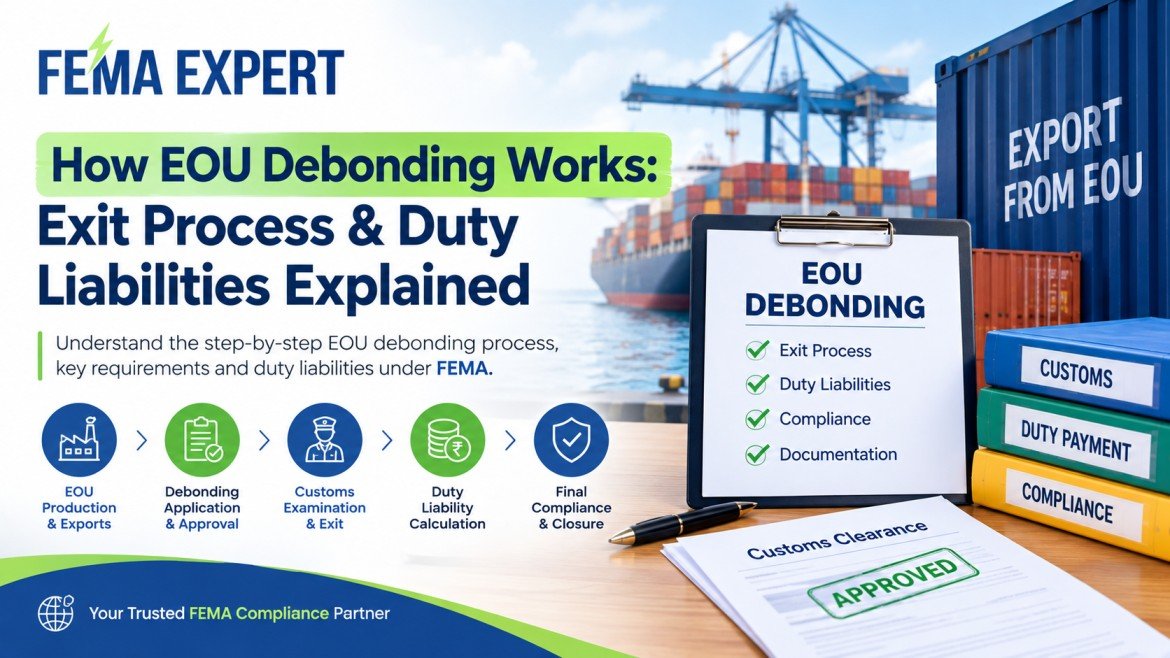
Put in your formal application asking to leave the EOU scheme.
Include a copy of your board’s resolution backing the exit decision, plus a signed undertaking addressing any obligations still pending.
Customs officials verify your actual duty liability against imported capital goods, raw materials, and consumables.
Once customs finalises the numbers from their review, clear whatever duty amount they’ve worked out.
Once cleared, surrender your B-17 bond. Keep compliance records archived for future reference.
Unused raw material doesn’t just disappear from the equation. You have choices:
Capital goods imported duty-free don’t get a free pass at exit. Duty applies on their depreciated value, not original cost.
This depreciation benefit reduces your liability somewhat. But the duty itself remains tied to your NFE position at exit.
Credit you claimed while running as an EOU doesn’t always stay yours once you exit, some of it may need to be reversed. Any GST refunds still in the pipeline get looked at too, as part of wrapping things up.
This is where many businesses get caught off guard. ITC positions built up over years need careful reconciliation before exit.
Scrap generated during operations isn’t exempt either. Excess scrap beyond permitted limits attracts duty during the debonding assessment.
Negative NFE at exit isn’t just a compliance footnote. It directly triggers repayment of duty benefits already availed, along with interest.
This is exactly why pre-exit NFE review matters so much. A negative position changes your entire settlement amount.
Once all dues clear, your unit formally becomes a DTA business. No more EOU-specific duty exemptions apply going forward. Regular domestic compliance rules take over from here.
FEMA Expert works with EOU owners to map out their debonding well ahead of time, so the final duty bill isn’t a shock on exit day.
Since debonding touches NFE, duty calculations, and broader trade compliance, our team also supports related FEMA advisory needs, including matters our ECB expert team handles for units with outstanding foreign borrowings.
Planning to exit your EOU? Reach out to FEMA Expert at least six months ahead to plan it properly.
Debonding from EOU isn’t a quick exit. NFE status, stock reconciliation, and duty settlement all need careful handling before customs grants closure. Planning early protects you from unexpected liabilities.
If you’re considering exiting your EOU, FEMA Expert’s team can help you plan the process well in advance.
1. What is debonding from EOU?
It’s the formal process of exiting the Export-Oriented Unit scheme and converting the business into a regular Domestic Tariff Area unit.
2. How long before exit should planning start?
At least six months ahead, since the process involves audits, documentation, and customs verification that takes time.
3. What’s the consequence of exiting with a negative NFE?
You’ll need to pay back the duty benefits you’d already claimed, plus interest on top of that.
4. Do I owe duty on machinery and equipment when debonding?
Yes, though it’s calculated on what the equipment is worth now, after depreciation, rather than its original import price.
5. What are my options for leftover raw material?
You can export it, destroy it under supervision, transfer it to another EOU, or clear it into the DTA with applicable duty and IGST.
6. Does ITC need to be reversed during EOU exit?
Often yes, depending on your claimed credit position, which gets reviewed as part of the closure process.
7. What documents are needed to start the debonding process?
A board resolution, legal undertaking, stock reconciliation records, and no-dues certificates are commonly required.
8. How can FEMA Expert help with EOU debonding?
We help review NFE status, reconcile compliance records, and guide the exit application process to avoid last-minute duty surprises.