
An importer once tried shipping a restricted item. He skipped checking DGFT rules first. Customs held his consignment. He hadn’t applied for the right license.
This happens a lot. This guide breaks down DGFT compliance. What licenses you need. How the process actually works.
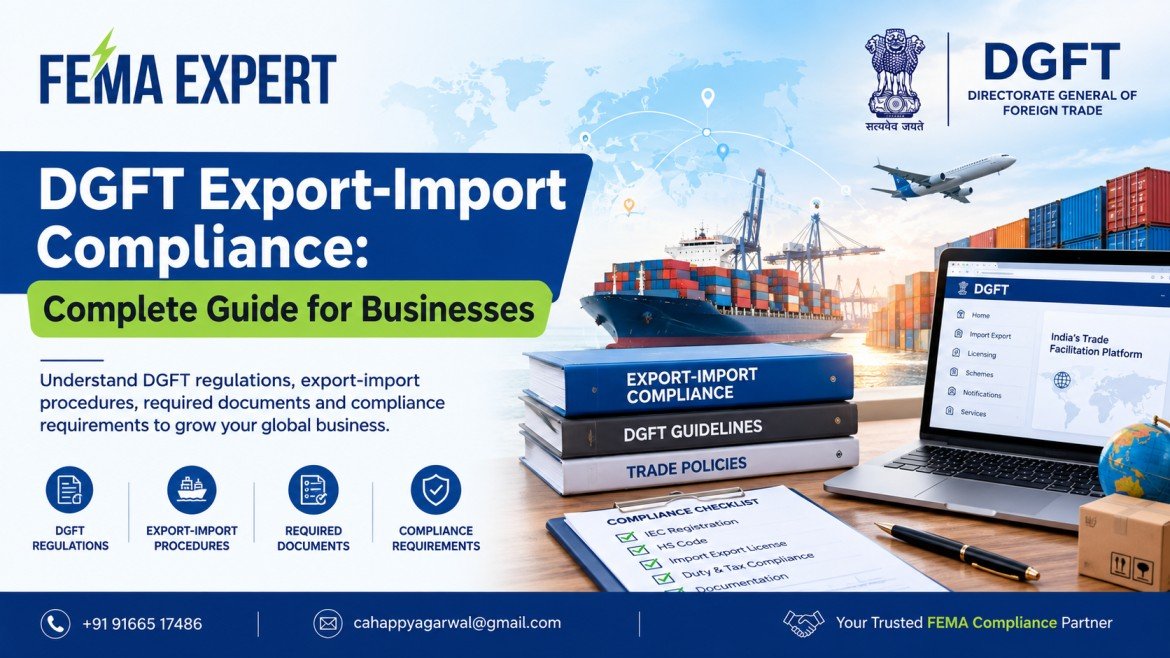
DGFT stands for Directorate General of Foreign Trade. It handles India’s import and export rules.
DGFT compliance simply means following those rules. Skip it, and your shipment can get stuck. Or rejected. Or delayed for weeks.
DGFT runs India’s Foreign Trade Policy. This policy gets reviewed from time to time.
DGFT works through regional offices. Spread across the country. Each office handles applications and approvals for businesses in its area.
Your starting point. Almost every import-export business needs this first.
Import inputs duty-free. The condition? Use them in a product you’ll export.
For capital goods. Pay reduced duty on machinery. In return, meet your export targets.
Some goods carry extra risk. SCOMET covers items tied to security or strategic concerns.
Step 1: Identify your license requirement. Figure out if IEC alone works. Or if you need EPCG or Advance Authorisation too.
Step 2: Register on the DGFT portal. Set up your business profile online.
Step 3: Submit your application. Fill in the details. Attach your documents.
Step 4: Pay the applicable fee. Fees change based on license type.
Step 5: Await verification. DGFT checks your application.
Step 6: Receive your license. Approved? You’re ready to trade.
Getting licensed isn’t the finish line. More duties follow.
IEC runs for life. But it needs a yearly profile update. Other licenses work differently. Advance Authorisation has fixed validity. It may need revalidation if time runs out.
At FEMA Expert, we guide businesses through DGFT licensing. IEC registration. EPCG. Advance Authorisation. All of it.
DGFT work often ties into bigger cross-border questions. That’s where our broader FEMA advisory comes in. Our FDI consultant in India team handles the foreign investment side too.
Need help with DGFT registration? Reach out to FEMA Expert.
DGFT compliance keeps your shipments moving. No holds. No penalties. Know your license. Stay on top of renewals. That’s really all it takes.
Need help with DGFT registration? FEMA Expert’s team can guide you through it.
1. What is DGFT compliance?
Following DGFT’s licensing rules before you import or export goods in India.
2. Is IEC the only DGFT license I need?
Not always. You might also need EPCG, Advance Authorisation, or SCOMET clearance, depending on your product.
3. What happens if I trade restricted goods without a license?
Customs can hold your shipment. You may face penalties or legal action too.
4. Does IEC need to be renewed every year?
No, IEC lasts for life. But you still need an annual profile update on the portal.
5. What is EPCG license used for?
Importing capital goods at lower duty. In exchange, you commit to specific export targets.
6. Who regulates DGFT compliance in India?
The Directorate General of Foreign Trade (DGFT) runs regional offices. They are located all over the country.
7. What documents are needed for DGFT registration?
You need the following:
8. How can FEMA Expert help with DGFT compliance?
We take care of license identification. We handle documentation and filing. We ensure ongoing compliance for IEC, EPCG, and Advance Authorisation.