
An importer once had a container of packaged snacks stuck at port. His label didn’t meet Indian rules. He hadn’t checked FSSAI requirements before shipping.
This costs time and money. This guide covers FSSAI food import compliance, from licensing to final clearance.
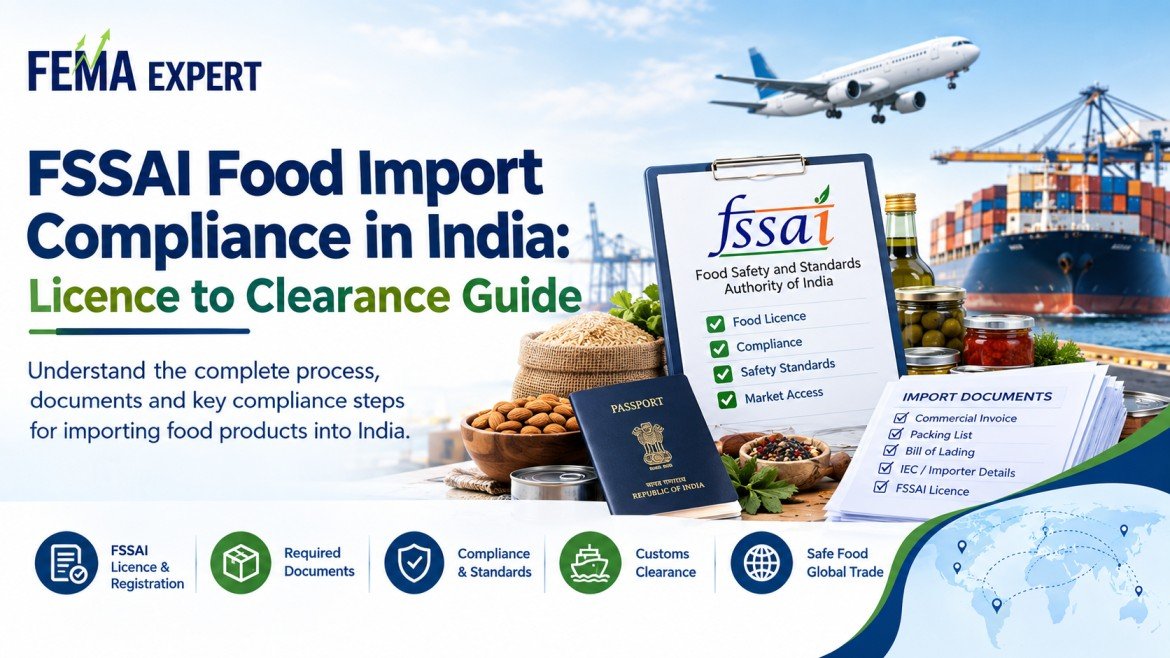
Food import compliance in India means following FSSAI’s rules before bringing food products into the country. These rules exist under the Food Safety and Standards (Import) Regulations, 2017.
The goal is simple. Only safe, quality-checked food should enter Indian markets. Every importer must follow this process, no exceptions.
Before importing anything, you need two things. A valid FSSAI import license. And an Import Export Code from DGFT.
Applications happen online, through the FoSCoS portal. You’ll need to submit:
Once submitted with payment, FSSAI reviews your application.
Commercial food imports need one specific license type. A Central License. This carries an annual fee of Rs. 7,500.
Smaller, non-commercial imports may follow different rules. But for regular business imports, Central License is mandatory.
FICS FSSAI is the system managing inspection and testing for imported food. It connects directly with ICEGATE, India’s customs platform, through SWIFT.
This integration means customs and FSSAI work together. Your consignment moves through both systems in coordination, not as separate silos.
Not every shipment gets the same scrutiny. FSSAI uses a Risk Management System to decide this.
High-risk products face full inspection and testing. Low-risk items get fast-tracked. This keeps low-risk shipments moving quickly, while maintaining safety checks where they matter most.
Labels sometimes fall short of Indian requirements. This doesn’t always mean rejection.
Regulation 8 allows fixing this at customs-bound warehouses. Importers can add a single, non-detachable sticker under an Authorised Officer’s supervision. Once corrected, the shipment moves to inspection normally.
After document checks, FSSAI inspects the shipment visually. Poor packaging or bad labeling triggers a Non-Conformance Report.
If visual inspection passes, samples go to an FSSAI-notified lab. Three outcomes follow:
Rejection isn’t always final. You have the right to appeal.
Valid grounds include labeling defects, lab report objections, or rectification directions. File your first appeal using Form No. 6, with a Rs. 2,000 fee. Still unsatisfied? A second appeal goes to FSSAI’s CEO, for Rs. 5,000.
Import compliance doesn’t stop after clearance. Every Food Business Operator must file an FSSAI Form D-1 annual return.
This is due by 31st May each year, covering the previous financial year. Miss it, and your license faces suspension or non-renewal risk.
Bulk items like pulses and grains get conditional labeling exemptions. Essential details can appear on master cartons instead of individual packs.
Frozen foods and fresh produce often can’t wait for full lab results. A Provisional NOC lets these move to storage while testing completes.
Shipping cereals and oils together? FSSAI samples once, at the first entry port. That sample covers all ports under the same Bill of Entry.
Expensive alcohol doesn’t need full-bottle samples. A 100ml sample works, with a manufacturer’s authenticity certificate attached.
Multi-product shipments get assessed item by item. Compliant products clear immediately, even if others in the same shipment don’t.
FSSAI food import compliance has clear steps, licensing, clearance through FICS, inspection, and annual filing. Knowing these steps before you ship saves you from costly delays at port.
1. What is FSSAI food import compliance?
It’s the process of meeting FSSAI’s safety and licensing rules before importing food products into India, under the FSS (Import) Regulations, 2017.
2. What license do I need to import food commercially?
A Central License from FSSAI, along with an Import Export Code from DGFT, are both required.
3. What is FICS in food import?
The Food Import Clearance System, which manages inspection and testing, integrated with customs through ICEGATE and SWIFT.
4. Can I fix a labeling issue after my shipment arrives?
Yes, Regulation 8 allows label rectification at customs-bound warehouses before inspection, under supervision.
5. What happens if my consignment fails lab testing?
An NCR is issued, and the shipment is rejected, though you can request retesting if the result is disputed.
6. What is Form D-1 in FSSAI compliance?
It’s the annual return every food importer must file with FSSAI, due by 31st May each year.
7. Can I appeal a rejected food shipment?
Yes, a first appeal costs Rs. 2,000 using Form No. 6, and a second appeal to FSSAI’s CEO costs Rs. 5,000.
8. Does every product in a shipment need to pass together?
No, FSSAI can clear compliant items individually, even if others in the same shipment face issues.