


A founder we spoke with had built a working product and signed her first paying customer. She thought her private limited company registration was enough to qualify for benefits. Months later, she discovered she had been paying full patent fees and income tax. A nearby startup was getting an 80% rebate on patents. It was also enjoying a three-year tax break. The difference was one extra step she hadn’t taken: DPIIT registration.
This happens a lot. Many founders treat startup registration and company incorporation as the same thing. They’re not. Company incorporation makes your business legal. DPIIT registration gives new businesses tax breaks. It also offers access to funding and reduced compliance burden.
This guide explains the benefits of DPIIT recognition. while detailing who can qualify and how to apply.
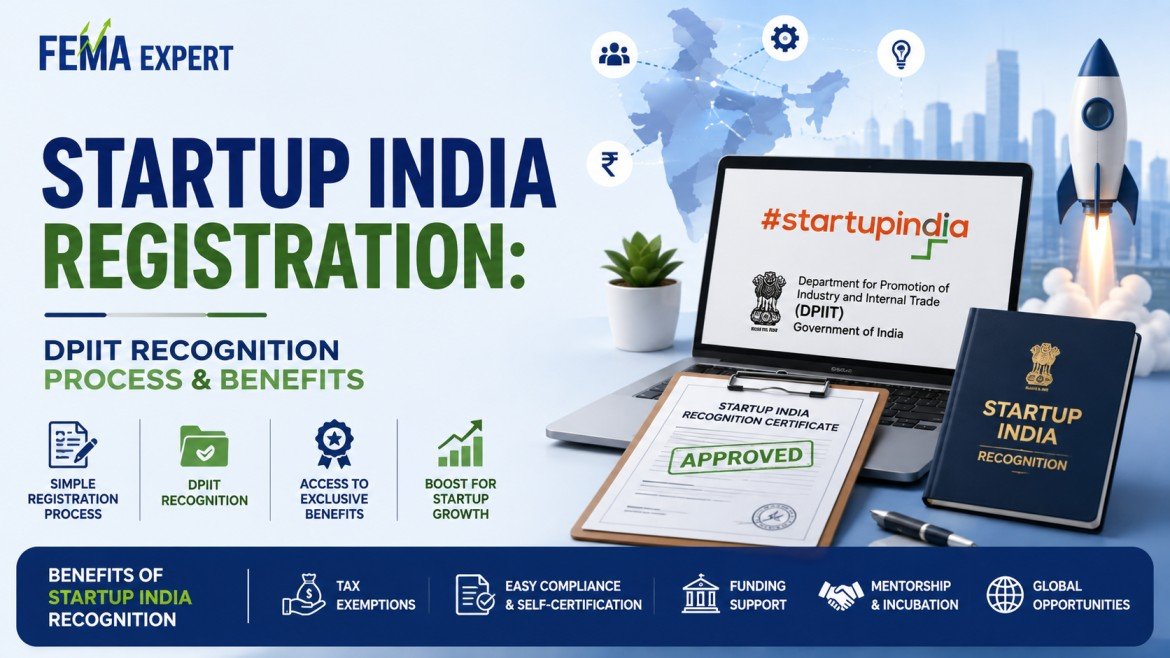
DPIIT registration is how eligible startups get formal recognition. They get a certificate. It comes from the Department for Promotion of Industry and Internal Trade. This Startup India certificate shows the Government of India sees your business as innovative. It also sees it as scalable. You receive tax exemptions. You also get IP rebates and funding support. Regular companies do not get these benefits.
The Government of India launched the Startup India Scheme in January 2016. Its goal is to create a stronger startup ecosystem throughout the country. Eligible businesses can apply for recognition. They can connect with mentors. They can access government schemes on the official Startup India portal. DPIIT recognition is the specific certification granted under this main program.
Not every registered business qualifies. From our experience helping founders through this process, most rejections come down to missing one of these basic conditions.
Here’s where most founders realise how much they’ve been missing without this certificate.
Governing Act
No
If you’re unsure about your business structure, determine your business structure first. This choice affects your eligibility for the Startup India scheme.
The scheme is fairly broad and open to most sectors, including:
There isn’t a set list of excluded sectors. However, the business must show real innovation and scalability, regardless of the sector
Step 1: Incorporate Your Business
Register your business as a Private Limited Company, LLP, or Partnership Firm. You need valid incorporation for DPIIT recognition.
Step 2: Visit the Startup India Portal Go to the official government site and set up your profile.
Step 3: Create Your Account Sign up with your business email. Then, fill in the basic registration details.
Step 4: Fill the Application Form
Enter your details:
Step 5: Upload Required Documents: Upload all items from the checklist. Make sure they match your entity type.
Step 6: Self-Certify Eligibility:Check if your business meets DPIIT rules. Review entity age, annual turnover, and innovation criteria.
Step 7: Submit the Application: Review each entry with care before submitting. Errors are a common reason for delays.
Step 8: Get Your Startup India Certificate: When your application is approved, you will receive a digital certificate.
You need this certificate to claim tax and IP benefits.
To get a Startup India certificate fast, first check that your documents match your entity type. This step often prevents delays.
DPIIT-recognised startups can claim a three-year income tax exemption under Section 80-IAC. You can choose any three years in a row from the first ten years. It doesn’t have to be just the first three after incorporation. This gives founders the flexibility to choose when profits begin to come in.
If an unlisted company gets a share investment above fair market value, it faces extra tax. This extra amount is taxed as ‘Income from Other Sources’ under Section 56(2)(viib).
DPIIT recognised startups are exempt from this tax. This makes early-stage investors more comfortable with deal structures.
| Parameter | DPIIT-Recognised Startup | Regular MCA Company |
| Tax holiday | Yes, under Section 80-IAC | Not applicable |
| Angel tax exemption | Yes | Not available |
| Patent fee rebate | 80% | Standard fees |
| Trademark fee rebate | 50% | Standard fees |
| Self-certification | Under select labour/environmental laws | Full compliance required |
| Winding up | Fast-tracked, around 90 days | Standard, longer timeline |
DPIIT recognition itself is free on the government portal. The fees for registering a startup vary based on your entity type and if you get professional help:
At FEMA Expert, we help founders with their Startup India registration. We make sure it’s done right the first time. We check eligibility, prepare documents, and file the DPIIT application for you.
Many startups we support work with foreign investors or overseas setups. Our team can manage your DPIIT recognition and any related FEMA compliance. This way, you won’t need to juggle two advisors for two connected issues. Want to register a startup in India? Contact FEMA Expert. They can help you avoid delays with the DPIIT process. Get started today!
Startup India registration isn’t extra paperwork after incorporating your company. It unlocks tax relief, funding access, and IP benefits designed for early-stage businesses. Getting your DPIIT application right the first time means you start using these benefits sooner rather than fixing avoidable delays later.
If you’re planning to register a startup company in India, FEMA Expert’s team can guide you through the entire DPIIT process.
1. What is DPIIT registration for startups?
It’s the government’s official process for eligible startups. Once recognised, they get a certificate. This certificate provides tax exemptions. It also offers IP rebates and funding from the Startup India Scheme.
2. How do I register a startup in India?
First, start your business. You can choose a Private Limited Company, LLP, or Partnership Firm. Then, apply for DPIIT recognition on the Startup India portal using your supporting documents.
3. What are the startup registration fees? DPIIT recognition itself is free; the actual cost depends on your entity incorporation fees and whether you use professional assistance for the application.
4. How long does it take to register a startup?
It varies. Most applications are processed within a few weeks if the documents are complete and accurate.
5. Can a sole proprietorship apply for DPIIT registration?
Only Private Limited Companies, LLPs, and Partnership Firms can qualify. Sole proprietorships and public limited companies are not eligible.
6. How can I get a startup India certificate faster?
Make sure your documents match your entity type exactly and your innovation description is specific, since vague applications are a common cause of delay.
7. What tax benefits come with DPIIT recognition?
A three-year income tax holiday under Section 80-IAC and exemption from angel tax on investments above fair market value under Section 56.
8. How can FEMA Expert help with startup India registration?
We assist with eligibility checks, documentation, and DPIIT application filing, and can coordinate this with any FEMA compliance if your startup involves foreign investors.