
A textile exporter we once worked with had her first international buyer ready. She packed the first shipment but then faced a setback at customs. Without an IEC code, the goods simply couldn’t move. She hadn’t even known this was a separate registration from GST.
This mix-up is common. Many first-time exporters and importers assume GST registration alone covers cross-border trade. It doesn’t. The Import Export Code (IEC) is essential. Without it, shipments cannot clear customs, and banks will not process foreign payments.
This guide covers what IEC is, how to apply for it, and what to watch out for along the way.
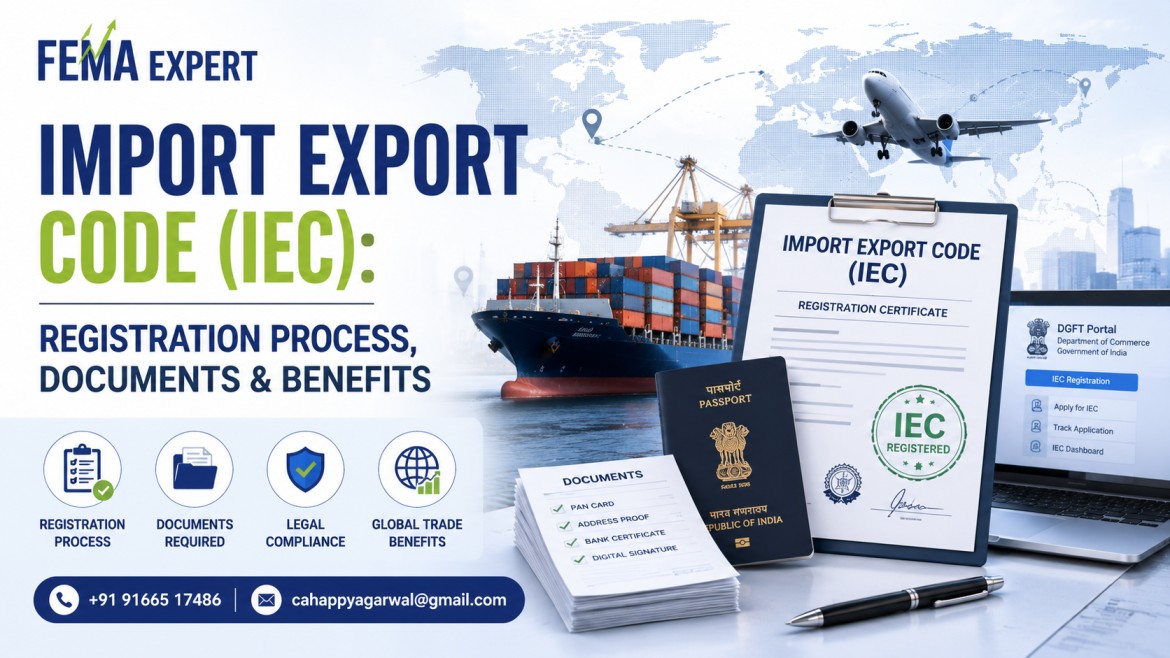
IEC stands for Import Export Code. To import or export from India, you need a 10-digit registration number. that any business or individual needs before importing into or exporting from India. It’s also called the Importer-Exporter Code, and once issued, it stays valid for the lifetime of the entity, with no renewal required.
If you’re asking what is IEC number in practical terms, think of it as the identity code customs authorities and banks use to recognise your business in any cross-border transaction.
The full form of IEC is Import Export Code. The DGFT is a part of the Ministry of Commerce. It focuses on trade matters. It issues it. All applications, modifications, and verifications happen through the DGFT’s online portal.
From our experience helping businesses set up their EXIM compliance, the confusion around IEC usually comes down to one thing: people don’t realise how many separate touchpoints actually need it.
Not every cross-border transaction needs a separate IEC.
Visit the DGFT website and create a login using your business email and mobile number.
Enter the OTP sent to your registered contact. Then, set a permanent password for future logins.
Log in, go to the IEC Profile Management section, and select “Apply for IEC” to begin a fresh application.
Provide accurate details for:
Upload your DSC to authenticate the application before submission.
Pay the applicable IEC code fees online and submit the application for DGFT processing.
Once approved, someone emails the certificate. You can also print the IEC directly from the DGFT portal in the IEC Profile Management section. If you want to apply for an IEC code, follow the steps above. The process usually takes around 10 to 15 days after you submit your application
An IEC has lifetime validity once granted, so there’s technically no expiry to renew against. That said, DGFT does require an annual update of the IEC profile between April and June each year, even if no details have changed. If you’re asking how to renew IEC code, this annual update is effectively what keeps your registration active and compliant.
You’ll need IEC modification whenever something on record changes, say your business address, bank account, or ownership structure. This is done through the same DGFT portal, under the “Modify IEC” option, and typically requires updated supporting documents for the changed information.
In most cases, yes. GST registration covers domestic and cross-border tax compliance, while IEC is specifically what customs and banks check for import-export transactions. The one exception is for GST-registered traders, where the PAN itself is treated as the IEC for trade purposes, reducing the need for a separate application.
At FEMA Expert, we help businesses get their import export license in place correctly the first time, from initial DGFT registration to ongoing profile updates and modifications. Since IEC compliance often overlaps with FEMA reporting on foreign remittances, our team handles both together, so your import-export operations and your regulatory filings stay aligned.
If you’re setting up a new import-export business or need help with IEC verification, application, or modification, reach out to FEMA Expert to get started.
An Import Export Code might seem like a small formality next to the bigger picture of running a cross-border business, but without it, shipments don’t clear customs and foreign payments don’t move through your bank. Getting it right from the start, and keeping the annual profile update current, saves you from delays right when a shipment or payment is time-sensitive.
If you’re applying for an IEC or need help with modification or renewal, FEMA Expert’s team can guide you through the entire process.
1.What is IEC code?
It’s a 10-digit registration number from the DGFT. This is needed for anyone or any business that imports to or exports from India.
2. What is the IEC full form?
Import Export Code, also referred to as the Importer-Exporter Code.
3. How can I check IEC verification or view IEC details?
You can complete IEC verification on the DGFT portal by searching the IEC number under the public search option, which displays the registered business details.
4. What are the IEC code fees?
The government fee for IEC registration is a nominal amount, payable online during the application process on the DGFT portal.
5. How do I get an import export license in India?
You apply through the DGFT portal by registering, filling in business and bank details, attaching your DSC, and submitting the application with the required documents.
6. Is IEC mandatory for all businesses?
No, GST-registered traders can use their PAN as the IEC, and IEC isn’t required for personal-use imports/exports or for certain government and charitable entities.
7. How do I modify my IEC after a business change?
IEC modification is done through the DGFT portal under the “Modify IEC” option, along with updated supporting documents for the changed details.
8. How can FEMA Expert help with IEC registration?
We assist with the full IEC application process, documentation, DGFT portal registration, annual profile updates, and modifications, alongside related FEMA compliance for foreign trade transactions.